Woolly Mammoths' Last Refuge
Wrangel Island was one of the last known places where woolly mammoths survived, with the final population dying out around 4,000 years ago, well after they disappeared from the mainland.
Russia
Wrangel Island
At the edge of the world, where the Chukchi Sea meets the East Siberian Sea, lies Wrangel Island, an austere and solitary world preserved by the Arctic's icy embrace. As dawn stretches its pale fingers across the horizon, the island awakens to a symphony of nature's whispers. Frost clings to rugged tundra, and the wind, a constant sculptor, shapes the landscape with its biting caress. Here, the air is tinged with the crisp, metallic scent of snow and sea, a reminder of both the island's isolation and its connection to the vast expanse of the Arctic.
As you step onto Wrangel Island's shores, the chill seeps through your layers, grounding you in a place where time holds a different rhythm. It is a realm of contrasts—where barren, frostbitten soils unexpectedly nurture bursts of life. The muted palette of greys and whites is punctuated by the vibrant plumage of migratory birds, their cries piercing the stillness as they dance across the sky. Above, the aurora borealis flickers—a celestial tapestry of greens and purples, hinting at secrets kept by the island since its earliest days.
Wrangel Island, now a nature reserve, has a history woven with threads of survival and discovery. It served as a sanctuary for the last known woolly mammoths, who roamed its plains long after their mainland counterparts had vanished. Their bones, scattered across the landscape, speak of a prehistoric world clinging to life. In the 19th century, the island became a beacon for explorers and adventurers, drawn by tales of its elusive existence. Americans Thomas Long and George Francis were among the first to lay eyes upon it, though its inhospitable conditions would challenge many who followed in their wake.
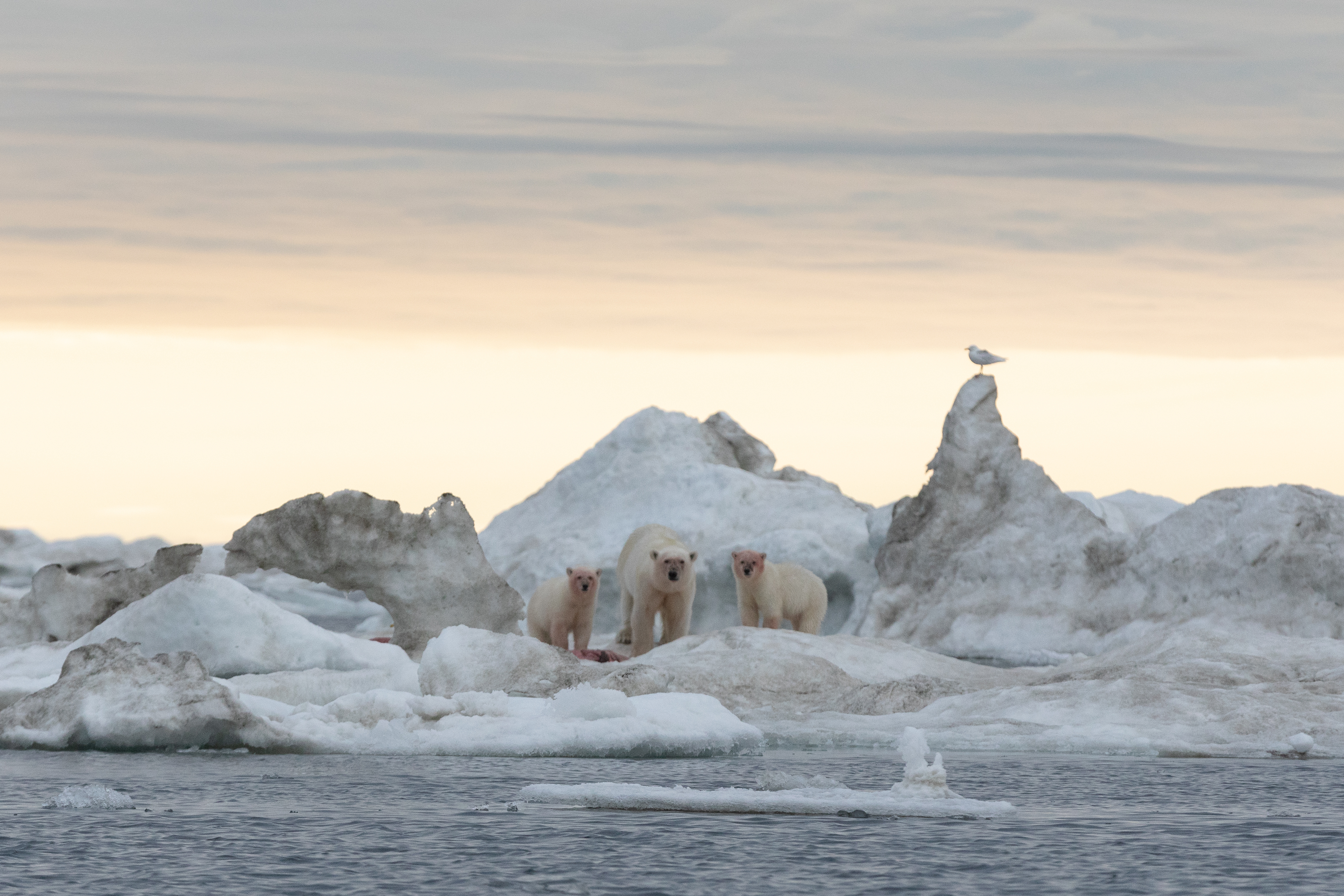
The island is a natural fortress, its steep cliffs and icy plains home to an array of wildlife that defies the harsh Arctic conditions. Polar bears, the monarchs of this frozen realm, stalk the sea ice with a grace that belies their sheer power. Each year, they gather on Wrangel Island to rear their young, finding solace and safety on its shores. The island's foxes, too, are emblematic of resilience, their russet coats a fiery contrast against the snow, as they scamper across the tundra in search of prey.
In the short-lived arctic summer, life erupts with frenzied intensity. Carpets of wildflowers—arctic poppies and dwarf willows—transform the monochrome landscape into a tapestry of color. The cacophony of birdsong fills the air as sandpipers and snow geese return to their breeding grounds, their migratory journeys a testament to nature's tenacity. Here, amid the tumult of life, the indigenous Chukchi people have long held a connection to Wrangel Island, weaving myths and stories that speak to the island’s spiritual significance.
Beyond its natural beauty, Wrangel Island is a living laboratory for scientists, who flock to its shores to study the effects of climate change on Arctic biodiversity. The island's unique ecosystem, once a refuge for ancient species, now serves as a bellwether for the impacts of a warming planet. The gradual retreat of sea ice, a stark indicator of environmental change, poses existential threats not only to the island's inhabitants but also to the broader ecological tapestry of the Arctic.
Yet, Wrangel Island holds mysteries that defy explanation. Among them, the enigmatic singing ice—a phenomenon where the frozen sea emits eerie sounds akin to a musical symphony. This natural orchestra plays on the senses, a haunting reminder of the beauty and fragility inherent in the planet’s polar extremes. Such mysteries are part of the island's allure, drawing those with a spirit of curiosity and a desire to understand the impossible balance of life in one of Earth's last frontiers.
As the sun dips below the horizon, casting long shadows over the island's rugged expanse, a profound stillness envelops Wrangel Island. It is a place where the boundaries of time blur, and the past and future merge into an eternal present. Here, you feel the weight of history in each snowflake, the legacy of species long gone in the crunch beneath your boots. Wrangel Island stands as a testament to nature’s endurance, a solitary sentinel at the edge of the world.
The future of Wrangel Island, like many remote corners of our planet, hangs in a delicate balance. It challenges us to reflect on our role in preserving such sanctuaries, urging us to consider the narratives we write about our shared home. Will the island remain a refuge for the wild, or will it become a cautionary tale of what we stand to lose? The answers lie in our collective hands, for the island’s fate is intertwined with our own.
In leaving Wrangel Island, one carries with them more than memories of wind-swept vistas and the chill of Arctic air. There is a lasting imprint, an indelible connection to a place that transcends the ordinary, urging us to protect and cherish the fragile beauty of our natural world. Wrangel Island beckons those who seek not just an adventure, but an understanding of the intricate dance between life and the elements, a dance that continues to unfold in this stark, beautiful enigma at the edge of existence.
Wrangel Island was one of the last known places where woolly mammoths survived, with the final population dying out around 4,000 years ago, well after they disappeared from the mainland.
Home to one of the highest densities of polar bear dens in the world, Wrangel Island serves as a critical birthing ground, where mothers dig dens in the snow to give birth during the harsh Arctic winter.
Despite its harsh climate, Wrangel Island boasts over 400 species of plants, making it the most botanically diverse island in the Arctic circle.
In 2004, Wrangel Island was designated a UNESCO World Heritage Site due to its unique combination of arctic biodiversity and the presence of numerous archaeological sites from ancient human settlements.
Remarkably, Wrangel Island escaped glaciation during the last Ice Age, preserving its landscape and allowing unique species to thrive where ice sheets covered most of the surrounding region.