Inaccessible Island Rail
Tristan Da Cunha is home to the world's smallest flightless bird, the Inaccessible Island Rail, which measures just 5 inches in length and is found only on one of the island's smaller neighbors, Inaccessible Island.
United Kingdom
Tristan Da Cunha
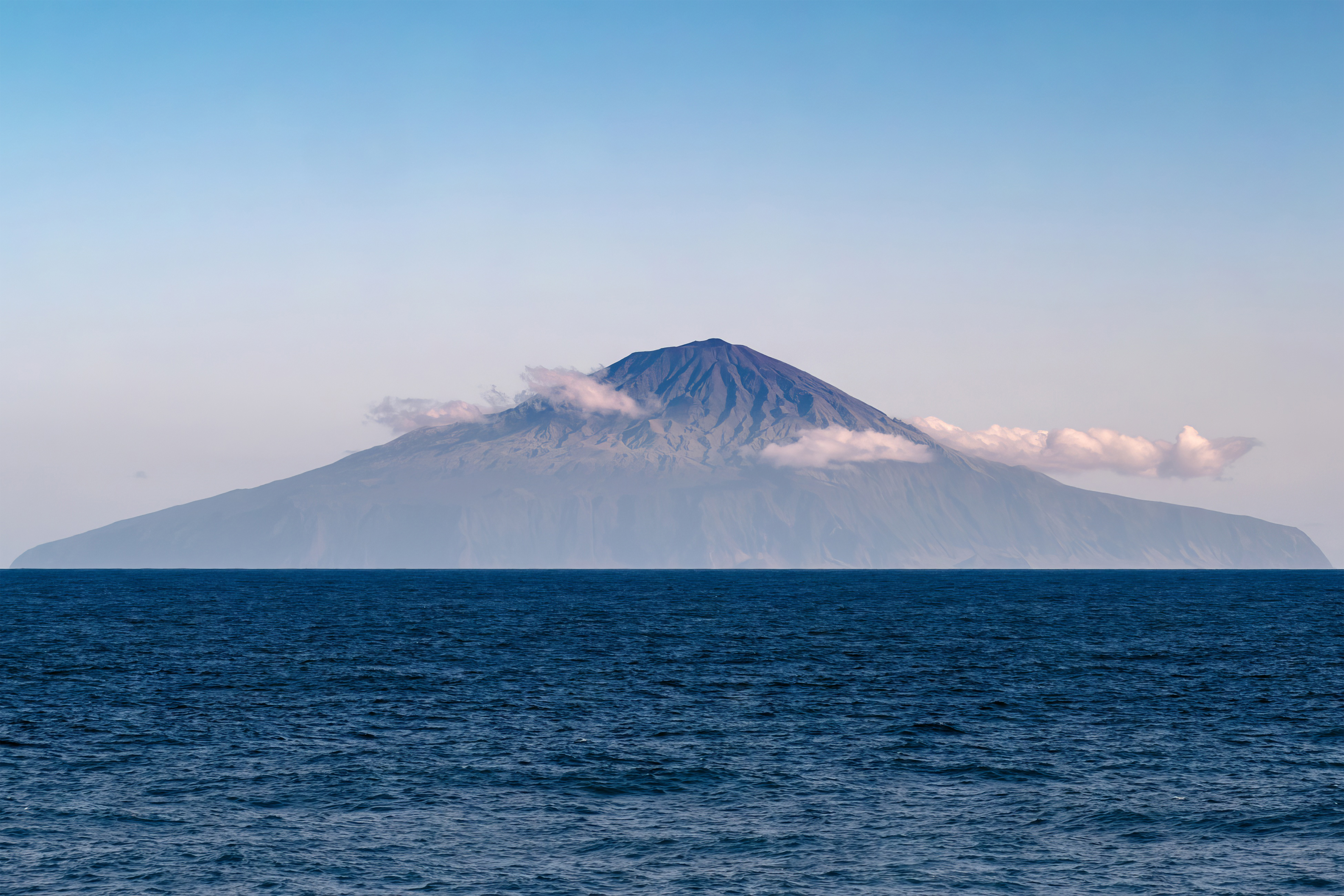
At dawn, Tristan da Cunha emerges from the mists of the South Atlantic like an ancient sentinel, silhouetted against a sprawling sky brushed with hues of rose and lavender. Here, 1,500 miles from the nearest human settlement, the island stands as an enigmatic fortress, battered by relentless winds and surrounded by an ocean that both cradles and isolates it. The air is crisp, infused with the briny scent of the sea and the earthy fragrance of volcanic soil, a testament to the island's fiery origins. Volcanic peaks, draped in emerald moss, pierce the clouds and cast long shadows that dance across the rugged terrain, whispering secrets of a land caught between time and tide.
Step onto the black volcanic sands of this remote British territory, and you'll find yourself in a world where nature reigns supreme. The island's 245 inhabitants, descendants of whalers and shipwrecked sailors, have carved out a life at the edge of the world, their daily existence intertwined with the rhythms of the land and sea. Here, the elements dictate the passage of time, with winter storms and summer squalls shaping both landscape and livelihood. In this place where isolation is both a burden and a blessing, the community thrives on resilience and unity, their stories etched into the fabric of the island’s history.
Tristan da Cunha's history is a tapestry woven with tales of exploration, survival, and endurance. Discovered by Portuguese sailor Tristão da Cunha in 1506, the island remained uninhabited until the early 19th century, when British garrisons were stationed here to guard against Napoleonic forces. In the years that followed, the island became a refuge for those seeking escape from the world, a haven for shipwrecked sailors and adventurers drawn to its wild beauty. Among them was William Glass, a Scottish corporal who, in 1816, founded the settlement that persists to this day, his legacy an enduring testament to human tenacity.
Nature, however, is the true sovereign of Tristan da Cunha. The island's rugged cliffs, sculpted by millennia of wind and wave, are home to colonies of seabirds—albatrosses and petrels whose cries pierce the salty air. The flora, too, is uniquely adapted to this isolated environment; the endemic Tristan Lobelia, with its cascading purple blooms, clings to the rocky slopes, a vibrant splash of color against the island's muted palette. The surrounding waters teem with life, from the sleek fur seals basking on rocky outcrops to the shoals of fish that dart through the crystalline depths, their scales flashing silver in the sunlight.
The islanders, custodians of this fragile ecosystem, live in harmony with their surroundings. Fishing remains the lifeblood of the community, with lobster traps set in the cold Atlantic waters yielding a bounty that sustains their economy. Agriculture, too, has taken root in the volcanic soil, where potatoes and other hardy crops are cultivated by hand, the fields tended with care by generations of families. In this isolated enclave, traditions are cherished and passed down, from the weaving of baskets from native flax to the crafting of intricate lacework, each piece a testament to the islanders' ingenuity and resourcefulness.
Yet, despite its remoteness, Tristan da Cunha is not immune to the forces of change. The islanders face an uncertain future, as climate change and global connectivity bring new challenges to their doorstep. Rising sea levels threaten the delicate balance of their ecosystem, while the allure of the outside world tempts younger generations to seek opportunities beyond the horizon. With each passing year, the island grapples with maintaining its identity in the face of an ever-shifting world, a testament to the resilience of those who call this place home.
In the quiet moments when the mist rolls in from the sea and shrouds the island in a veil of mystery, one can almost hear the echoes of the past—tales of explorers and exiles, whispered by the winds that sweep across the highlands. It is in these moments that Tristan da Cunha reveals its true nature—a place where history and myth intertwine, where the boundaries between past and present blur, and where the spirit of adventure still lingers in the salty air.
As the sun dips below the horizon, casting a golden glow over the island, one is left to ponder the fate of this remote outpost. Will it remain a bastion of tranquility, a sanctuary where nature and humanity coexist in harmony? Or will it succumb to the relentless march of time and change, its stories fading into the annals of history? For now, Tristan da Cunha endures, its essence captured in the hearts of those who walk its rugged shores, a testament to the enduring spirit of exploration and the timeless allure of the unknown.
Tristan Da Cunha is home to the world's smallest flightless bird, the Inaccessible Island Rail, which measures just 5 inches in length and is found only on one of the island's smaller neighbors, Inaccessible Island.
The islanders speak a unique dialect of English that blends Scottish, English, American, Dutch, Italian, and St. Helenian influences, reflecting the diverse origins of its early settlers.
Due to the lack of arable land, Tristan residents cultivate their crops in an area called 'The Patches'—a communal farming area located several miles from the main settlement.
Despite its remote location, Tristan Da Cunha is part of a network for astrophysical research, providing unique data on cosmic rays that help scientists understand high-energy particle physics.
The island is a critical breeding ground for the Northern Rockhopper Penguin, which has seen dramatic population declines, making Tristan Da Cunha vital for the species' conservation.