Guano Rush of the 19th Century
In the 1870s, Starbuck Island was a hotbed for guano mining due to its rich phosphate deposits, attracting American and British interests eager to exploit this natural fertilizer.
Kiribati
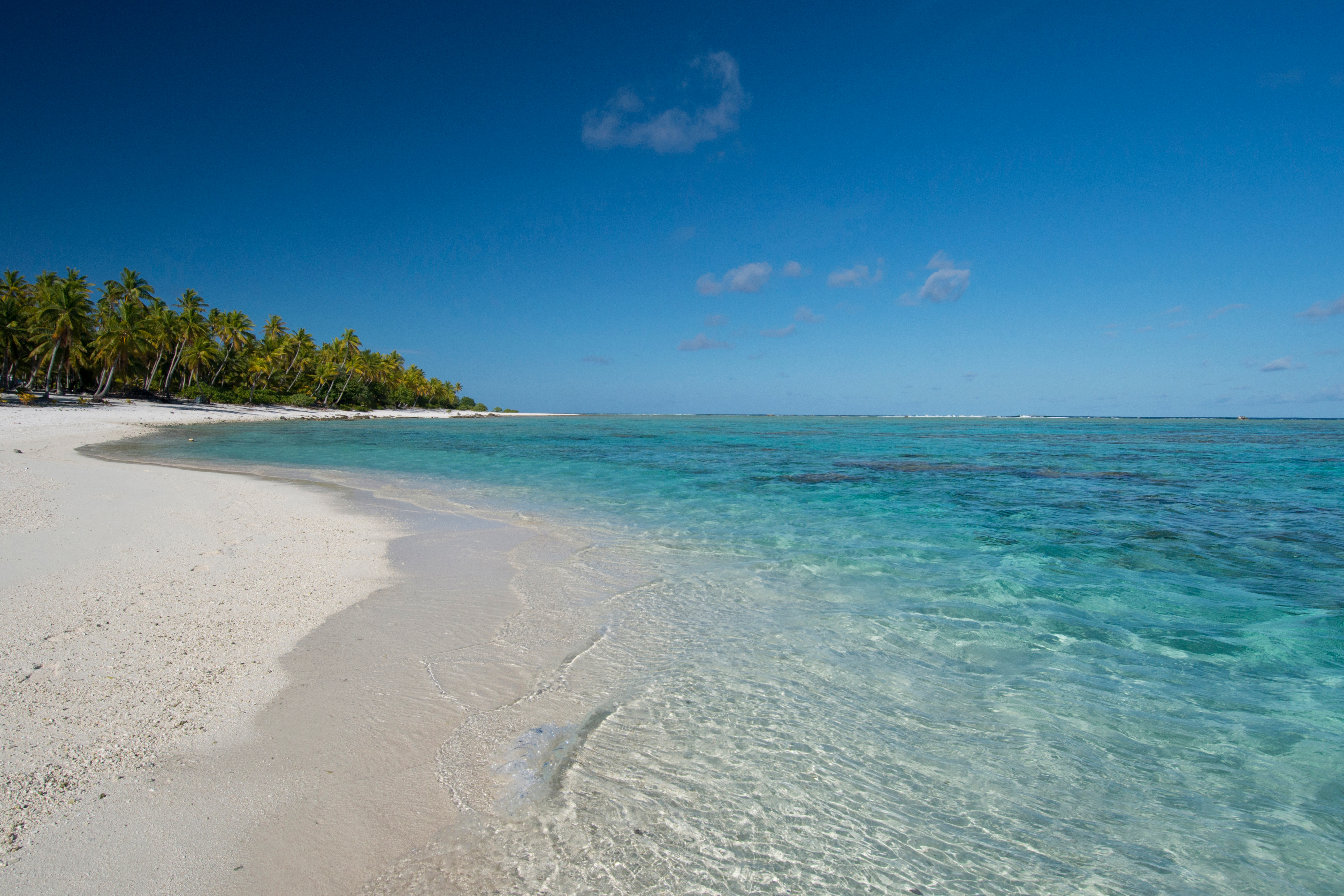
Starbuck Island
In the vast expanse of the Pacific Ocean, where the azure waters stretch beyond the horizon and the sky kisses the sea, lies Starbuck Island—an enigma shrouded in time and untouched by modern human hands. A mere speck on the map, this isolated jewel of the Kiribati archipelago beckons like a siren whispering secrets through the crash of the surf against its coral-laden shores. As you approach, the sun-drenched island appears to float upon the ocean, its low-lying terrain a mere 8 kilometers long, circumscribed by a halo of white foam where waves relentlessly pound the reefs.
Here, the air is infused with the crisp tang of salt and the earthy scent of sand baked under an unyielding sun. The wind, a constant companion, sings through the sparse vegetation—a low, mournful whistle that seems to carry the ghosts of sailors long lost to these waters. Starbuck Island, uninhabited and enigmatic, reveals itself in layers: its flat, barren landscape a canvas painted in shades of tan and green, dotted with clusters of drought-resistant shrubs that cling to life with tenacity born of survival against the odds.
In the 19th century, the island was a bustling hub of the guano trade—a rich resource of phosphate fertilizer that drew ships from distant lands, their sails billowing like great wings as they navigated treacherous reefs. The remnants of this era linger still, ghostly relics strewn across the landscape: rusted machinery half-buried in sand, weathered wooden beams bleached by decades of relentless sun, and the skeletal frames of long-abandoned buildings, now home only to nesting seabirds. Among these avian residents, the sooty tern reigns supreme, its cacophonous calls a constant symphony echoing across the island's stark expanse.
It is said that more than a million terns populate Starbuck during the breeding season, their dark forms a swirling mass against the brilliant blue sky. They nest amidst the rubble of a bygone era, their presence a testament to nature's inexorable reclamation of human endeavors. As you walk the island's desolate paths, the ground crunches beneath your feet, fragments of coral and shell mingling with the coarse sand, each step a reminder of the island's isolation and its ever-shifting shores.
Yet, beneath this facade of barrenness, Starbuck Island holds secrets written in its very soil. The island is a living laboratory, a testament to the resilience of life in one of Earth's most hostile environments. Scientists who brave the journey here are rewarded with glimpses into unique ecosystems that thrive in the absence of humans. They study the island's thriving bird colonies and the interplay between land and sea, uncovering clues about species adaptation and the impact of climate change on low-lying islands.
Starbuck's history is not without its tales of tragedy and endurance. In 1870, the British barque “Rosario” was shipwrecked upon its reefs, leaving its crew to wrestle with the island's inhospitable conditions. Stranded for months, they subsisted on scant freshwater collected in the island's natural depressions and scavenged what they could from the wreckage washed ashore. Their story, a narrative of survival against the odds, is etched into the island's narrative, a poignant reminder of human fragility in the face of nature's vastness.
The island's remoteness has preserved not only its ecological integrity but also its place in the annals of time—a solitary world where the rhythm of life is dictated by elemental forces rather than human interference. Here, the cycles of the moon cast a silvery glow over nocturnal landscapes, the gentle lapping of waves a lullaby that carries through the night. Each dawn brings a renewal, the sun rising to illuminate a world that feels both ancient and eternal, where the simplicity of existence unveils profound truths about survival and the passage of time.
As you stand on Starbuck's shores, you cannot help but feel a mingling of awe and humility. The island is a paradox—a place where emptiness is rich with life, and silence speaks volumes. It invites reflection on the delicate balance that exists between humankind and nature, urging a deeper understanding of our place in the world and the legacy we leave upon it.
Starbuck Island remains a sanctuary of solitude, a place where the past and present converge in a dance as old as the sea itself. Here, time stands still, and the future is written in the whispers of the wind. In its isolation, the island offers a rare glimpse into the primal forces that shape our world—an invitation to listen, to learn, and to marvel at the beauty and mystery that lie just beyond the reach of human civilization. In this untouched corner of the Pacific, Starbuck Island stands as a testament to nature's enduring power, a place where the stories of the sea are etched into the very fabric of the Earth.
In the 1870s, Starbuck Island was a hotbed for guano mining due to its rich phosphate deposits, attracting American and British interests eager to exploit this natural fertilizer.
Starbuck Island is one of the few places on Earth without any sources of freshwater, requiring any expeditions or visits to bring their own water supplies for survival.
Despite its barren landscape, Starbuck Island serves as an important bird sanctuary, hosting large colonies of seabirds like the masked booby and the lesser frigatebird.
Declared part of the Phoenix Islands Protected Area in 2008, Starbuck Island's pristine ecosystem is safeguarded, making it one of the largest marine protected areas in the world.
Starbuck Island is completely uninhabited and rarely visited, earning its nickname as a 'ghost island' with only occasional scientific expeditions dropping by.