Most Densely Populated Island
Santa Cruz del Islote is only 0.012 square kilometers but is home to around 500 people, making it the most densely populated island in the world.
Colombia
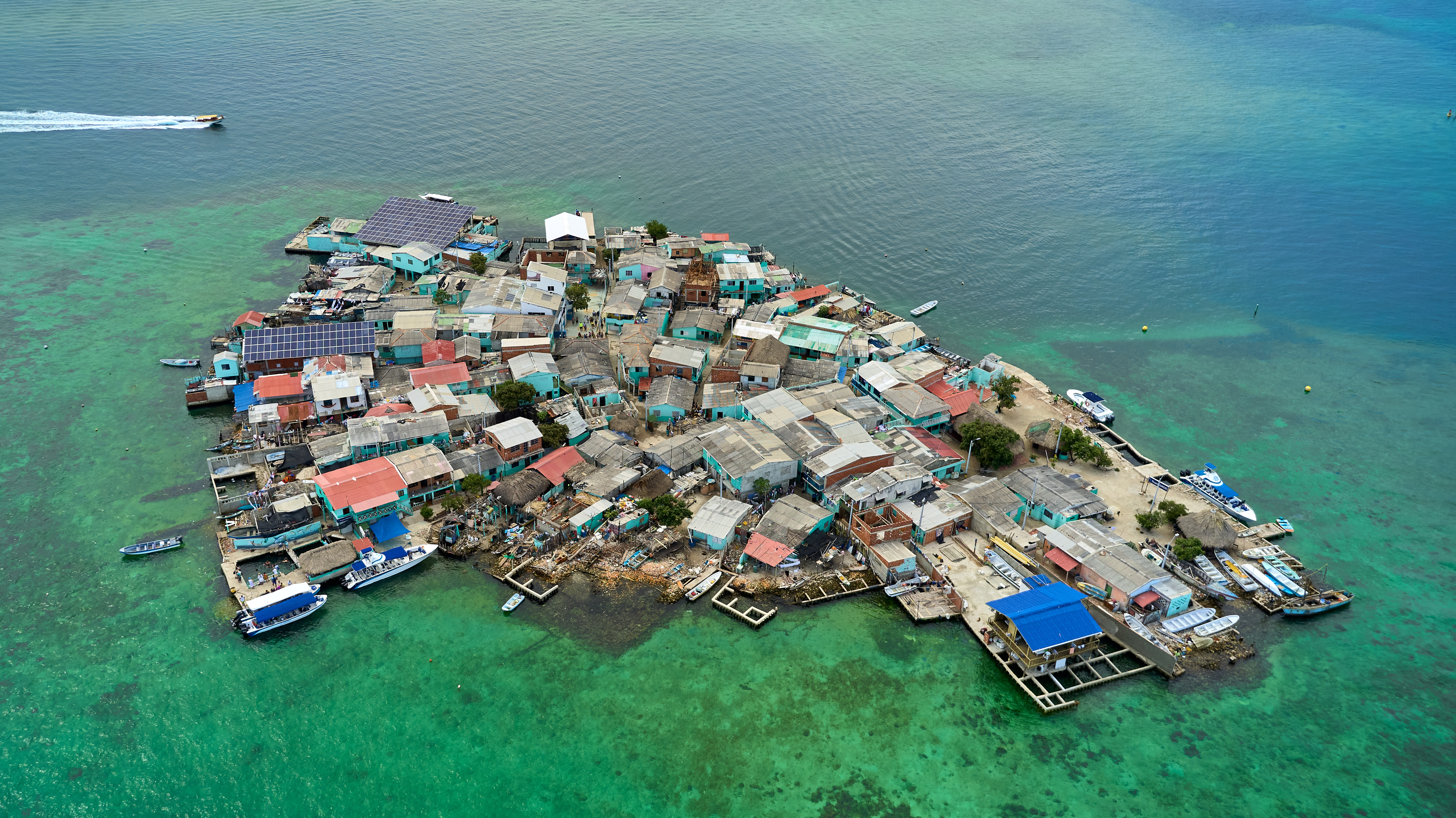
Santa Cruz del Islote
As the first pale rays of dawn stretch across the Caribbean Sea, they illuminate a curious spectacle: Santa Cruz del Islote, a mere speck of land floating off the coast of Colombia. This island, smaller than a soccer field yet teeming with life, is home to around 1,200 residents, making it one of the most densely populated islands in the world. The salt-laden breeze carries the sound of children's laughter mingling with the rhythmic slap of fishnets against wooden boats. The air is thick with the scent of brackish water and fresh-caught fish, a sensory tapestry that defines this unlikely community.
Step onto the stone-quarried pathways of Santa Cruz del Islote, and you are immediately enveloped in its vibrant mosaic of sounds and colors. Houses painted in hues of aquamarine, coral pink, and sunburst yellow jostle for space, their walls nearly kissing. Above, seagulls wheel and cry, their calls punctuating the chatter of neighbors exchanging morning greetings as they head to the island's heart: the central square. Here, under the watchful gaze of a statue of the Virgin Mary, life unfolds in all its bustling simplicity.
Historically, Santa Cruz del Islote's origins are as humble as they are intriguing. In the late 19th century, fishermen from nearby islands sought refuge from stormy seas and discovered this rocky outcrop. Over time, it transformed into a permanent settlement, buoyed by the resilience and camaraderie of its people. These early inhabitants, much like the coral that forms the island's foundation, adapted and flourished in a space where survival demanded ingenuity and solidarity.
The natural world here is both a challenge and a benefactor. With no fresh water source, residents rely on rainwater collection and weekly deliveries from the mainland, a lifeline that underscores the fragility of their existence. Yet, the surrounding turquoise waters teem with marine life, providing sustenance and a livelihood. Fishermen, their skin bronzed by the sun, venture out at daybreak in fiberglass boats, returning with bounties of pargo and snapper, their eyes alight with tales of the sea.
Santa Cruz del Islote is a living tapestry of Afro-Colombian culture, a legacy of the Spanish colonial era that resonates in the lilting notes of cumbia music and the rhythmic footfalls of traditional dances performed during the island's vibrant festivals. These celebrations, anchored by the Feast of Saint Cruz, are a riot of color and sound, where the community unites in joy and prayer, honoring their shared heritage and the spirit of their ancestors.
Despite its idyllic appearance, the island's future is precarious. Climate change casts a long shadow, with rising sea levels threatening to reclaim the land. The community faces an existential crisis, yet their resolve remains unbroken. Elders gather in the shade of porches, weaving baskets and recounting tales of a time when the sea was a respected adversary, not an impending threat. Their stories, passed to the younger generation, instill a sense of responsibility and connection to this fragile land.
In a corner of the island, the local school stands as a beacon of hope and ambition. With space at a premium, classrooms spill into open courtyards where lessons blend with the sounds of the sea. Here, children learn not just arithmetic and literature, but the value of their unique heritage. They are the custodians of the island's future, tasked with balancing modern aspirations with the traditions of their forebears.
Perhaps the most unexpected discovery on Santa Cruz del Islote is the profound sense of community that binds its residents. In this crowded space, privacy is a luxury, yet there is an openness and generosity of spirit that is palpable. Doors remain unlocked, and meals are shared in spontaneous gatherings that dissolve the boundaries of individual homes. This interconnectedness is the island's greatest strength, a testament to the power of human resilience in the face of daunting odds.
As evening descends, the island is bathed in the warm glow of a hundred tiny lights flickering to life, casting golden reflections onto the water. The day draws to a close with the gentle murmur of waves lapping against stone foundations and the distant hum of a radio playing the soft strains of vallenato. The night air is cool and still, the sky a canopy of stars that seem close enough to touch.
Santa Cruz del Islote's story is one of survival and adaptation, a narrative written on the faces of its people and the walls of its colorful homes. It is a reminder of the delicate balance between humanity and nature, a microcosm of the challenges faced by coastal communities worldwide. In its vibrant streets and bustling squares, we find a living legacy of resilience and hope, a place that invites us to reflect on the threads that connect us all.
In the end, Santa Cruz del Islote leaves us pondering the essence of home and the bonds that define it. It challenges us to consider our own relationship with the environment and the legacy we wish to leave behind. As the island navigates an uncertain future, its story continues to unfold, a testament to the enduring spirit of those who call this improbable place home.
Santa Cruz del Islote is only 0.012 square kilometers but is home to around 500 people, making it the most densely populated island in the world.
Due to its small size, Santa Cruz del Islote has no cemetery; deceased residents are taken to the nearby island of Mucura for burial.
Electricity on Santa Cruz del Islote is provided by a single generator, which operates for only five hours each evening, making energy conservation a community priority.
With limited space, the community constructed a football field extending over the sea using a platform, where residents gather for matches and social events.
Freshwater is a precious resource, delivered only once every three weeks by boat, highlighting the islanders' resilience and creativity in water conservation.