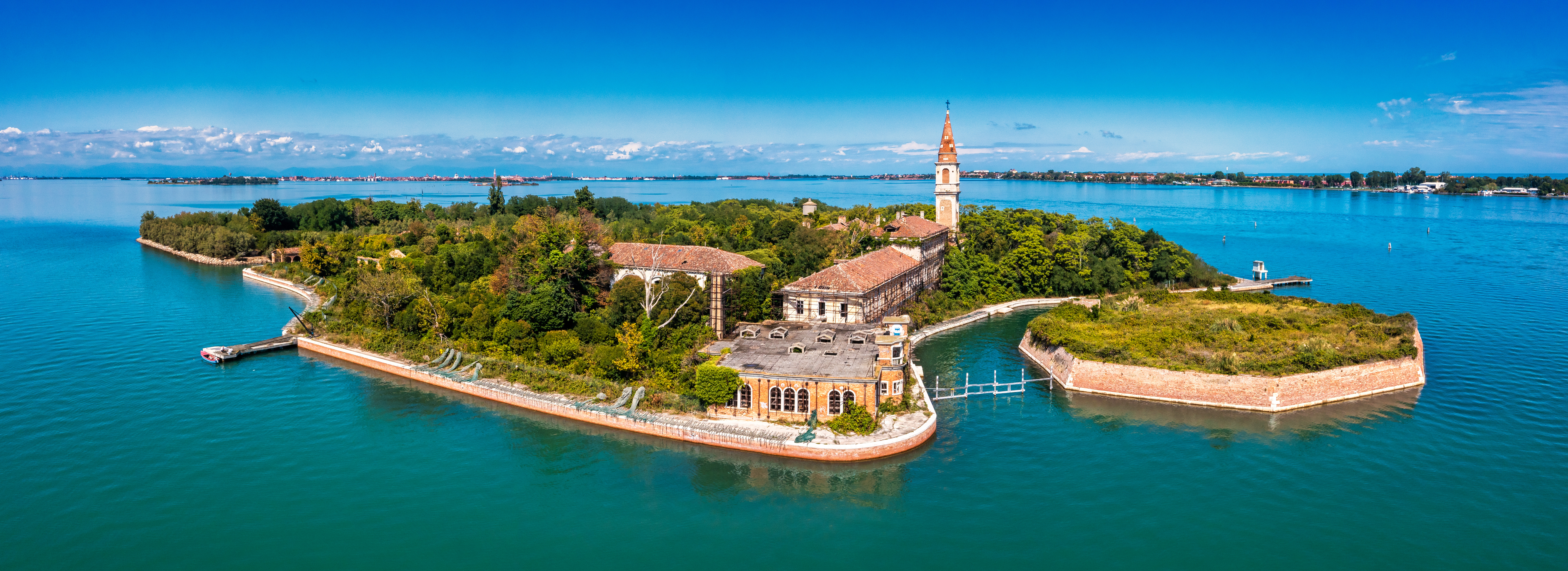
At the heart of the Venetian Lagoon, where turquoise waters lap lazily at the edges of timeworn stones, lies Poveglia Island—a fragment of land shrouded in whispers and myth. As the sun rises, the island emerges from the morning mist with an ethereal glow, its silhouette softened by the haze that clings to the autumn air. The scent of brine mingles with the earthy aroma of ancient cypress trees, while the distant echoes of church bells from neighboring Venice reverberate across the water. Step ashore, and the wind carries murmurs of history, stories of past lives etched into every cracked brick and crumbling wall.
To the casual observer, Poveglia might seem abandoned, but the island's uninhabited state belies a rich tapestry of human presence that lingers in the air. Once a bustling trade point, its strategic location made it a coveted jewel in the Venetian Republic. But it is the island's darker past that envelops it in an aura of mystery, as if time itself has chosen to weave a cloak of secrets around it. During the plague-stricken years of the 18th century, Poveglia became a quarantine station, an isolated purgatory for those afflicted by the Black Death. The air hangs heavy with the specter of those who once inhabited its shores, their voices lost to the annals of history, yet palpable in the silence that now reigns.
The island's natural features offer a stark contrast to its haunting past. Dense vegetation reclaims what remains of human endeavor, with ivy creeping over derelict buildings and wildflowers bursting through cracks in the pavement, their vibrant petals a testament to life's tenacity. Amidst this symphony of decay and renewal stands an octagonal bell tower, its once-proud silhouette now casting long shadows over the island's western edge. Once part of a church that served as a beacon for weary sailors, the tower remains a solitary sentinel, a reminder of faith and resilience.
Poveglia's ecological significance cannot be overstated. The island is a sanctuary for migratory birds, their vibrant plumage a striking contrast against the muted backdrop of dilapidated structures. The calls of herons and egrets echo across the lagoon, a harmonious chorus that sings of the island's return to nature. Beneath the water's surface, seagrass meadows sway with the current, harboring a wealth of marine life that thrives in the relative isolation of this tranquil corner of the Mediterranean.
Yet, it is the human element that breathes life into Poveglia's stone and soil. Stories of those who dared to call this place home weave a rich narrative tapestry, from the fishermen who cast their nets into its bountiful waters to the monks who sought solace within its cloistered confines. In more recent history, the tales turn darker still—of a psychiatric hospital that operated on the island until the mid-20th century, where the echoes of forgotten souls linger in the corridors like distant memories.
Amidst the shadows, unexpected details add layers of intrigue to Poveglia. Local legends speak of a doctor who succumbed to madness, driven by the despairing cries of his patients, and who ultimately leapt from the bell tower to his death. Such stories have fueled the island's reputation as one of the world's most haunted places, drawing the curious and the courageous to its shores in search of the supernatural.
Time here is a curious thing, measured not by the ticking of clocks but by the shifting light that dances through broken windows and the ebb and flow of tides that chart their own course. As seasons change, so too does the mood of the island—summer's golden light gives way to autumn's melancholy greys, while winter wraps Poveglia in a shroud of mystery, its fog-laden paths inviting only the most intrepid souls.
The fate of Poveglia hangs delicately in the balance, suspended between past and future. Efforts to redevelop the island have stumbled over its haunted legacy, yet whispers persist of new life breathing once more into its weathered structures. In a world where history is often overwritten in the name of progress, Poveglia stands as a poignant reminder of the stories that shape us and the places that hold them.
As you leave Poveglia behind, the island lingers in your thoughts, a place where time is both a river and a stone, where echoes of the past carve new paths into the future. It's a place that invites reflection and sends a shiver of wonder down your spine, its mysteries as deep and enduring as the waters that surround it. In the end, Poveglia is not just an island; it is a repository of human experience, a silent witness to the ebb and flow of history. And perhaps, just perhaps, it waits patiently for the next chapter to unfold.