Last Bounty Mutineers' Home
Pitcairn Island became the final refuge for the mutineers of the HMS Bounty in 1790. The descendants of these mutineers still inhabit the island, maintaining a unique link to this infamous historical event.
Pitcairn Islands (British Overseas Territory)
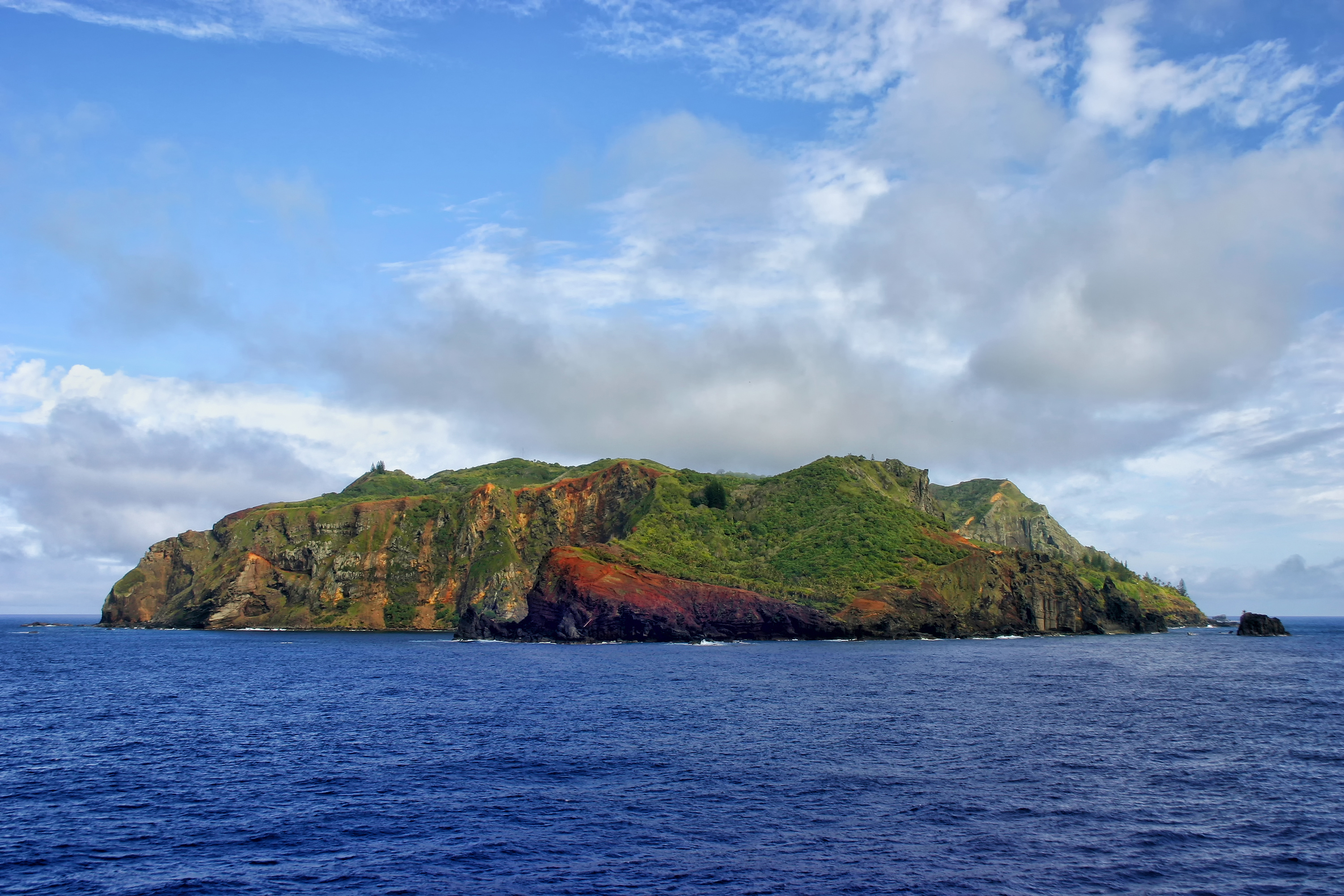
Pitcairn Island
At dawn, Pitcairn Island emerges from the Pacific Ocean like a solitary sentinel, its rugged silhouette etched against the soft hues of the waking sky. A gentle breeze carries the whispers of the sea, mingling with the sharp tang of salt and the earthy aroma of damp foliage that clings to the volcanic soil. The island, a mere 2.2 square miles, is adrift in the vast blue blanket between South America and New Zealand—nearly 3,000 miles from the closest continental landmass. Here, isolation is an artist, sculpting a landscape and a people uniquely their own.
Step onto its rocky shores and feel the immediate embrace of this wild, untamed sanctuary. The warmth of the black sand beaches contrasts with the cool morning air, as the sun gradually ascends to bathe the steep cliffs in its golden glow. The island’s terrain is a labyrinth of verdant hills and valleys, each path leading to a new secret—a hidden grotto, a towering banyan tree, or a sudden, breathtaking view of the endless ocean horizon.
History whispers through the rustling of breadfruit leaves and the distant roar of the surf against basalt. In 1789, the infamous mutiny on the HMS Bounty cast the island into the annals of maritime legend. Fletcher Christian and his fellow mutineers, seeking refuge from the British Navy, chose this speck on the world map as their sanctuary. Their story, woven with threads of rebellion, passion, and survival, lives on in the island's soil and in the eyes of their descendants. Pitcairn’s population of around 50 is largely made up of these descendants, their genealogy a living tapestry of that fateful chapter in history.
The island’s legacy is not solely one of mutiny. It is a place where the rhythms of daily life align with the cycles of nature. The Pitcairners, as they are known, rise with the sun, their lives intertwined with the natural world. Gardens overflow with tropical abundance—papaya, bananas, and taro—nurtured by the island’s fertile volcanic soil. Fishing remains a cornerstone of sustenance and community, with each catch celebrated in shared meals that echo with laughter and storytelling.
Yet, Pitcairn is more than its history and traditions; it is a living laboratory of ecological wonder. The island’s rugged terrain harbors a diverse array of flora and fauna, many of which exist nowhere else on earth. The endemic Pitcairn reed warbler flits among the foliage, its song a sweet, solitary note in the symphony of island life. The sapphire waters surrounding the island teem with vibrant coral reefs, a dazzling underwater kaleidoscope that draws the rare intrepid diver into its depths.
One unexpected delight awaits in an unassuming grove, where the honeybees—untainted by disease or pollution—produce a nectar renowned worldwide for its purity. This honey, golden and fragrant, embodies the essence of Pitcairn—strikingly unique and impossibly rare.
As the sun climbs higher, the island reveals more of its character, its shadows shrinking to reveal the textures of its landscape. The jagged cliffs are bleached by relentless sun, standing tall as guardians of secrets yet to be told. The air vibrates with the distant, rhythmic pounding of surf against rock, a constant conversation between earth and sea.
The island is not without its challenges. The isolation that shapes its culture also poses barriers to modern conveniences. Supply ships are infrequent visitors, and the internet, a tenuous link to the outside world, is as sporadic and unpredictable as the trade winds. Yet, it is this very remoteness that forges a resilient spirit among the islanders, a bond strengthened by the shared task of sustaining life on this distant outpost.
In the evening, as the sky blushes with the soft hues of dusk, the island breathes with a tranquil sigh. The wind, now a gentle caress, carries the scent of the ocean and the distant echo of seabirds returning to their nests. The stars begin to punctuate the night, a glittering testament to the vastness that surrounds Pitcairn, each constellation a reminder of the island’s place in the universe.
You find yourself entangled in the island's essence, pondering the myriad tales it holds—the unyielding spirit of the mutineers, the enduring traditions of its people, and the delicate ecosystems that flourish in harmony. Pitcairn stands as a testament to resilience and adaptability, a microcosm of life’s tenacity at the edges of the world.
As you depart, a lingering question remains: What does the future hold for this isolated enclave, where time seems to stand still yet marches inevitably forward? The answer rests in the hands of those who call Pitcairn home, whose lives and stories continue to weave the fabric of this enigmatic island's legacy. The ocean’s whispers fade into the distance, leaving you with a sense of wonder and a yearning to uncover more of the world’s hidden corners, one solitary island at a time.
Pitcairn Island became the final refuge for the mutineers of the HMS Bounty in 1790. The descendants of these mutineers still inhabit the island, maintaining a unique link to this infamous historical event.
With a population fluctuating around 50 residents, Pitcairn Island is one of the least populous territories in the world. This tiny community is largely made up of descendants from just four families.
Pitcairn is home to 80 different varieties of bananas, including the unique 'pitcairn' banana, a prized delicacy only found on the island.
In 2016, the waters surrounding Pitcairn Island were designated as the world's largest marine reserve, encompassing 830,000 square kilometers of ocean, protecting an array of marine biodiversity.
The islanders speak a creole language known as Pitkern, a linguistic blend of 18th century English and Tahitian, reflecting the heritage of the island's original settlers.