Uninhabited Yet Mysterious
Despite being uninhabited, Palmyra Atoll is steeped in eerie legends, including tales of ghost ships and mysterious disappearances that have captured the imagination of sailors for decades.
United States
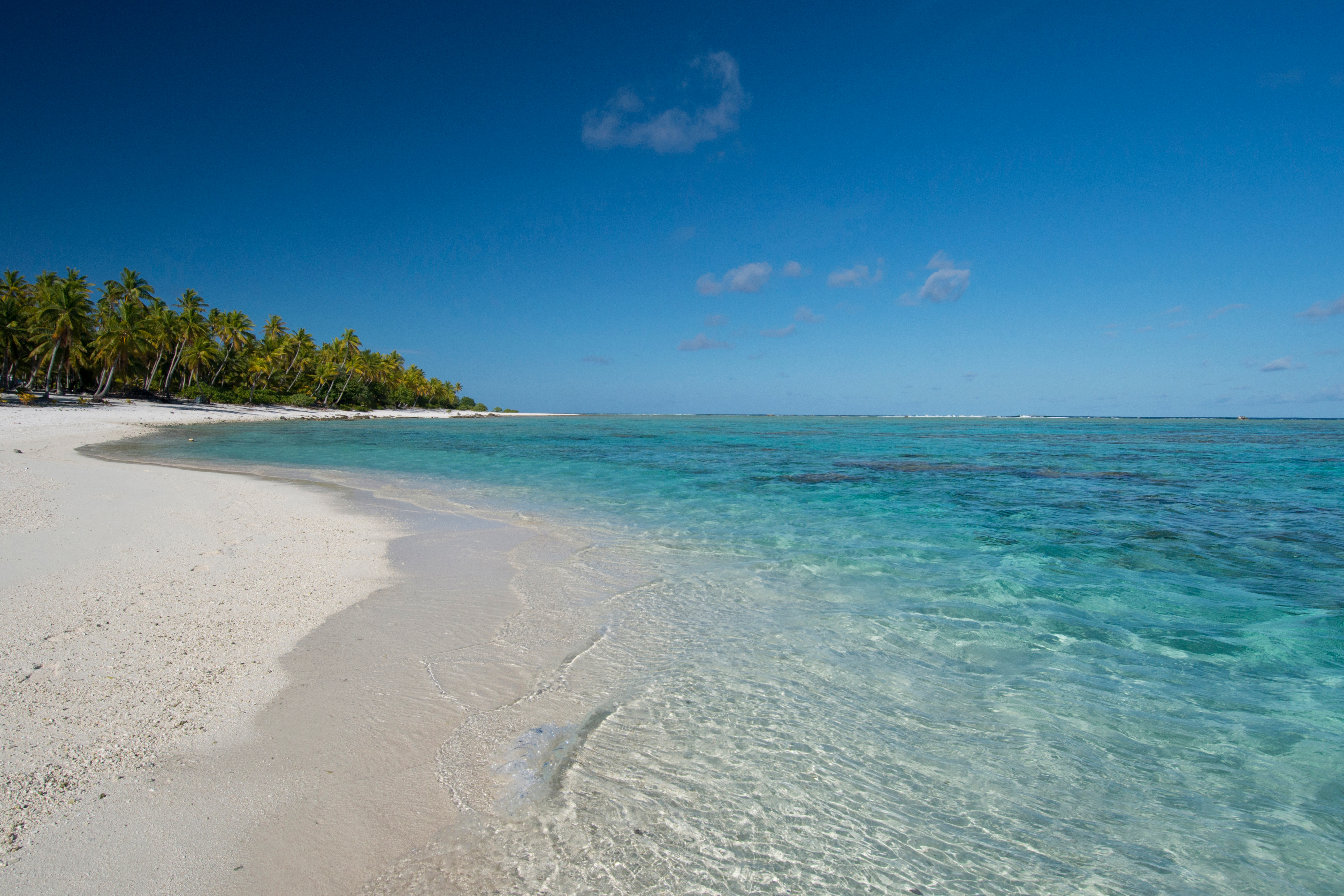
Palmyra Atoll
At the cusp of dawn, Palmyra Atoll emerges from the Pacific's vast embrace like a forgotten diary, its pages fluttering in the warm equatorial breeze. Here, where the ocean stretches endlessly, the sky often blurs into the horizon, painting waves in hues of lilac and rose. Silence reigns, broken only by the distant cry of a red-footed booby or the gentle lap of turquoise waters against its pristine shores. This crescent-shaped paradise, lost amid the vastness of the central Pacific, lies approximately halfway between Hawaii and American Samoa, casting a spell of isolation and intrigue upon those who dare to imagine its history.
Step onto its coral sand and feel the softness beneath your feet, an invitation to wander through a landscape sculpted by time and tide. The air is thick with the scent of salt and the earthy aroma of coconut palms, their leaves rustling like whispers in the gentle trade winds. Despite its current state of solitude, Palmyra Atoll was once a bustling hub of military activity during World War II, a stark contrast to its peaceful present. Its runways, now overgrown and forgotten, once echoed with the roar of aircraft, while the soldiers who called this lonely outpost home left their indelible mark upon its history.
Nature has reclaimed much of what was built, and today, the atoll is a vibrant tapestry of life. Over 400 species of fish dart through its crystalline waters, and green sea turtles glide gracefully through kaleidoscopic coral gardens. This ecological haven, protected by its isolated location, shelters an array of endemic species, including the Palmyra Atoll gecko, a diminutive creature that scampers over sun-bleached logs on the forest floor. Such biodiversity, scientists argue, provides crucial clues to understanding the resilience of ecosystems amidst climate change.
History lingers here in the most unexpected ways. The skeletal remains of concrete bunkers, softened by moss and lichen, stand sentinel over the atoll, silent witnesses to a time when war raged across the Pacific. Among these ruins, tales of the past intermingle with the cries of frigatebirds in the cerulean sky. Palmyra's story, however, is not merely one of military might. It is a tale of human endurance, of those who braved its remote shores in search of fortune or refuge. In the 19th century, whalers and explorers left their mark, while later, an eccentric millionaire dreamed of transforming this uninhabited paradise into his personal utopia.
The atoll's shifting sands have also borne witness to darker legends. Stories of shipwrecks and mysterious disappearances weave a fascinating tapestry of intrigue. One such tale, known as the Palmyra Atoll Murders of the 1970s, casts a shadow over its sunlit beaches. The chilling narrative, involving deception and tragedy, continues to captivate those who hear it, ensuring that Palmyra remains enshrined in mystery.
Yet, despite its tumultuous history, Palmyra is a sanctuary for those who wish to study its unique environment. The atoll, now a National Wildlife Refuge, is a living laboratory. Scientists flock here to unlock the secrets of its ecosystems, eager to learn how this untouched world thrives in harmony. The atoll's lagoons, lined with mangroves, offer a glimpse into how life might have been at the dawn of time, when nature dictated the rhythms of existence without human interference.
As the sun arcs overhead, shadows lengthen and the heat intensifies, drawing you towards the dappled shade of tall Pisonia trees. Their branches, heavy with nests, sway gently as terns and tropicbirds chatter above. These trees, with their sticky seeds, play an essential role in the atoll's ecology, illustrating the delicate balance of life here. At night, the sky unravels into a canopy of stars, their reflection dancing upon the calm lagoon, a reminder of the eternal passage of time and the smallness of human endeavor.
Palmyra's rich tapestry of life and history invites reflection on our place in the world. It is a sanctuary, not just for the myriad creatures that dwell here, but for the soul seeking solace and understanding. Here, far from the cacophony of modern life, one can truly listen—to the rustle of leaves, the whispers of ocean breezes, and the silent stories of the past.
As you prepare to leave this enigmatic atoll, the question lingers: how will Palmyra's story unfold in the years to come? Will it remain a sanctuary, a testament to nature's resilience? The future of Palmyra is as unfathomable as its history, an open book awaiting the next chapter. In its isolation lies its strength, and perhaps, just perhaps, in that solitude, lies the hope for its preservation.
In the end, Palmyra Atoll is more than just a speck in the vast Pacific; it's a reminder of the world as it once was and, perhaps, could be again. Its untouched beauty, rich history, and fragile ecosystems challenge us to look beyond ourselves, to cherish what we have, and to ponder what we might lose. As the waves continue their eternal dance upon its shores, the atoll remains a beacon of mystery and wonder, calling out to those who seek to understand the indelible link between past, present, and future.
Despite being uninhabited, Palmyra Atoll is steeped in eerie legends, including tales of ghost ships and mysterious disappearances that have captured the imagination of sailors for decades.
Palmyra Atoll hosts one of the most pristine coral reef ecosystems in the world, with over 130 coral species and 400 fish species, making it a critical site for marine biodiversity research.
During World War II, Palmyra Atoll served as a strategic military outpost for the United States, with its airstrip and naval facilities playing a crucial role in Pacific operations.
In 2009, Palmyra Atoll became part of the Pacific Remote Islands Marine National Monument, protecting its unique ecosystems and making it one of the largest marine conservation areas in the world.
The atoll is home to a research station operated by The Nature Conservancy and other organizations, where scientists study climate change impacts and conservation strategies in a nearly untouched environment.