Northernmost Land on Earth
Kaffeklubben Island holds the title of the northernmost point of land on the planet, located just 440 miles from the North Pole, making it a significant point of interest for polar explorers.
Greenland
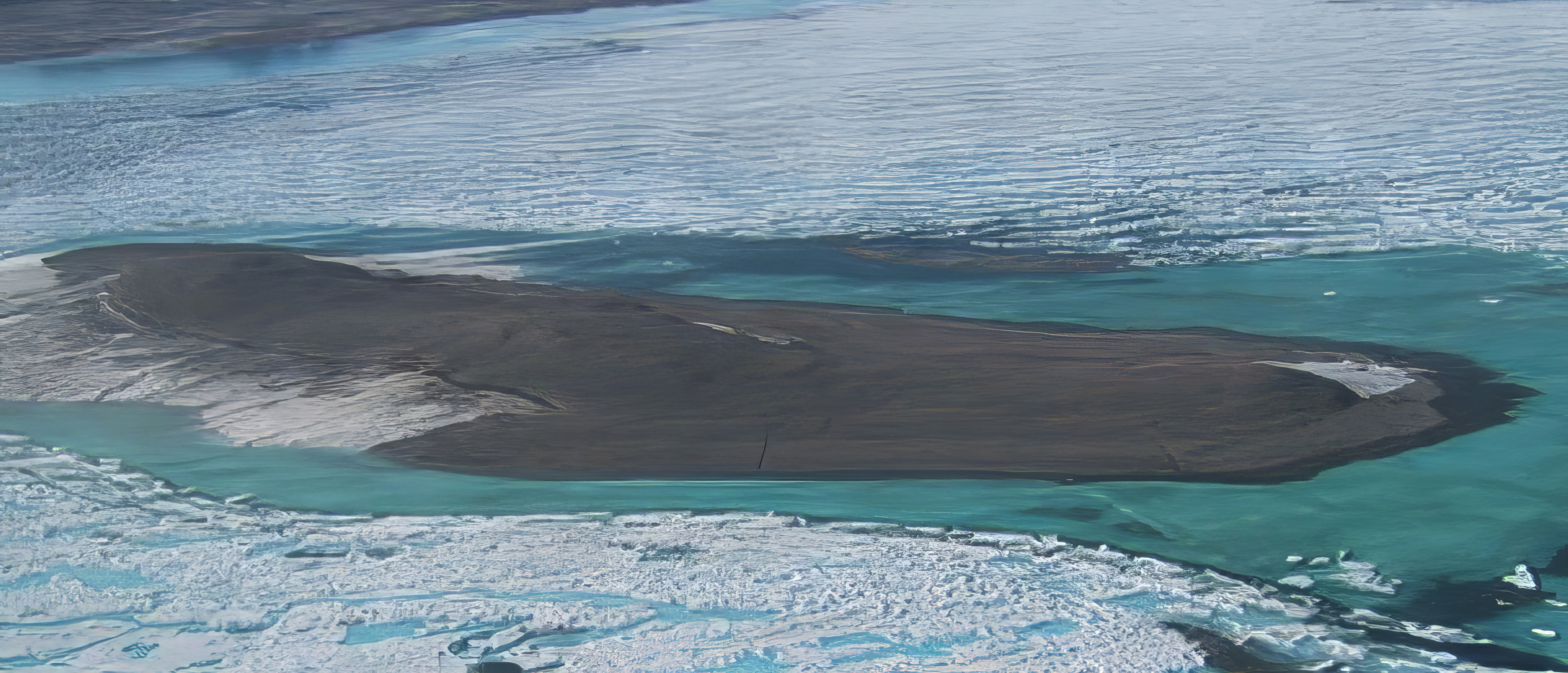
Kaffeklubben Island
At the edge of the world, where the Arctic Ocean's icy breath lingers and the northern lights waltz across the sky like ethereal dancers, lies Kaffeklubben Island. A mere whisper in the vastness of Greenland’s icy expanse, this island sits solemnly at 83°39′45″N—the most northerly point of land on our planet. The island's surface, just a rocky outcrop mantled in snow and touched by the relentless winds, is a tableau of stark solitude. You can almost hear the deep, haunting silence as the polar sun hangs low, casting long shadows over the barren land. Here, the world’s edge is not just a geographic reality but an existential state, where time stretches like the endless horizon.
As you step onto Kaffeklubben's frostbitten soil, the air feels thin and brittle, infused with the sharp, biting aroma of salt carried by the Arctic gales. There is an overwhelming sense of isolation. Yet, beneath the superficial desolation lies a landscape teeming with stories of resilience and survival. The island’s perpetual frost conceals ancient secrets, whispering tales of explorers who once battled nature’s unforgiving elements to set foot on this enigmatic land. In the early 20th century, it was Danish explorer Lauge Koch who first claimed this frozen speck, naming it "Kaffeklubben" to honor an informal Copenhagen coffee club where great minds pondered geographical mysteries.
The island's glacial beauty is matched by its ecological significance. Despite the harsh conditions, Kaffeklubben Island hosts a surprising array of life, clinging tenaciously to existence. The Arctic willow, its form grotesquely sculpted by the ceaseless winds, hugs the ground in tiny clusters, its leaves a muted silver-green against the snow. This hardy flora hides in plain sight, offering sustenance to the island's sparse but tenacious insect life that includes tiny Arctic collembola, known more commonly as snow fleas. These minute creatures perform a delicate ballet atop the icy crust, their movements dictated by the whims of the Arctic’s unforgiving climate.
Beneath the island’s surface, the rocks tell a story of Earth's turbulent past. Comprised of granite and gneiss, they bear the scars of geological forces millions of years old, their surfaces smoothed by glacial movements and relentless winds. This rugged terrain has stood unwavering through the ages, a silent guardian to the secrets of the Arctic’s evolutionary narratives. Scientists regard Kaffeklubben as a living laboratory, a place to study the effects of climate change at the planet’s extremities, where the ice is receding at a pace that once seemed unfathomable.
Yet, Kaffeklubben Island is more than just an ecological and geological marvel; it is a canvas for the spirit of human curiosity and endurance. Imagine the explorers who braved these inhospitable climes: their breath crystallizing in the frigid air, their feet crunching on the ice, every step a testament to human perseverance. The island, though uninhabited, resonates with their invisible footprints and the echo of bygone ambition. For those who reach its shores, it offers a profound solitude and an opportunity to reflect on our place in the ever-changing tapestry of Earth.
Despite its remote location, Kaffeklubben Island does not escape the touch of global politics and scientific intrigue. Its status as the northernmost land has been a point of pride and contention, a symbol of national achievement in the annals of Arctic exploration. The island serves as a stark reminder of the enduring allure of the Arctic—untamed, enigmatic, and increasingly accessible as climate change redraws the icy borders.
As the sun dips toward the horizon, casting a golden hue over the frozen landscape, Kaffeklubben transforms. Shadows stretch languidly across the crystalline surface, and the island's silence deepens into something almost sacred. In this moment, you can sense the immutable passage of time, the island's past merging seamlessly with its uncertain future. Here, you stand at a crossroads between the known and the unknown, where science meets the sublime, and the whispers of history linger in the chill of the Arctic air.
Kaffeklubben Island, in all its starkness, invites contemplation. It compels us to consider the planet's extremes, the delicate balance of life, and the tenacity of those who seek to understand them. When you leave this remote outpost, the silence and solitude stay with you, wrapped around your thoughts like the endless Arctic night. This island, unyielding against the ravages of time and climate, poses an unspoken question—how will we care for the world's most fragile places as they stand on the brink of change?
In Kaffeklubben Island's icy embrace, you are reminded of the vastness of the world and our role within it—a whisper of land that speaks volumes about the resilience of nature and the spirit of exploration. As you depart, the northern lights begin their dance, painting the sky with ripples of color, a final farewell from a place that remains as enigmatic as the night sky itself.
Kaffeklubben Island holds the title of the northernmost point of land on the planet, located just 440 miles from the North Pole, making it a significant point of interest for polar explorers.
This tiny Arctic island was discovered in 1900 by explorer Robert Peary, but it wasn't until 1921 that Danish explorer Lauge Koch confirmed its existence and named it after the Copenhagen coffee club he was part of.
Kaffeklubben Island is a barren, rocky outcrop with no vegetation, offering an extreme example of Arctic desert conditions, a fascinating study for geologists and climate scientists.
The island is often obscured by shifting pack ice, which creates a dynamic and challenging environment for researchers trying to access it, highlighting the effects of climate change in the Arctic region.