A Curse or Coincidence?
Isola La Gaiola is rumored to be cursed due to a series of unfortunate events including the mysterious deaths and financial ruin of several owners, including the suicide of a German industrialist in the 1920s.
Italy
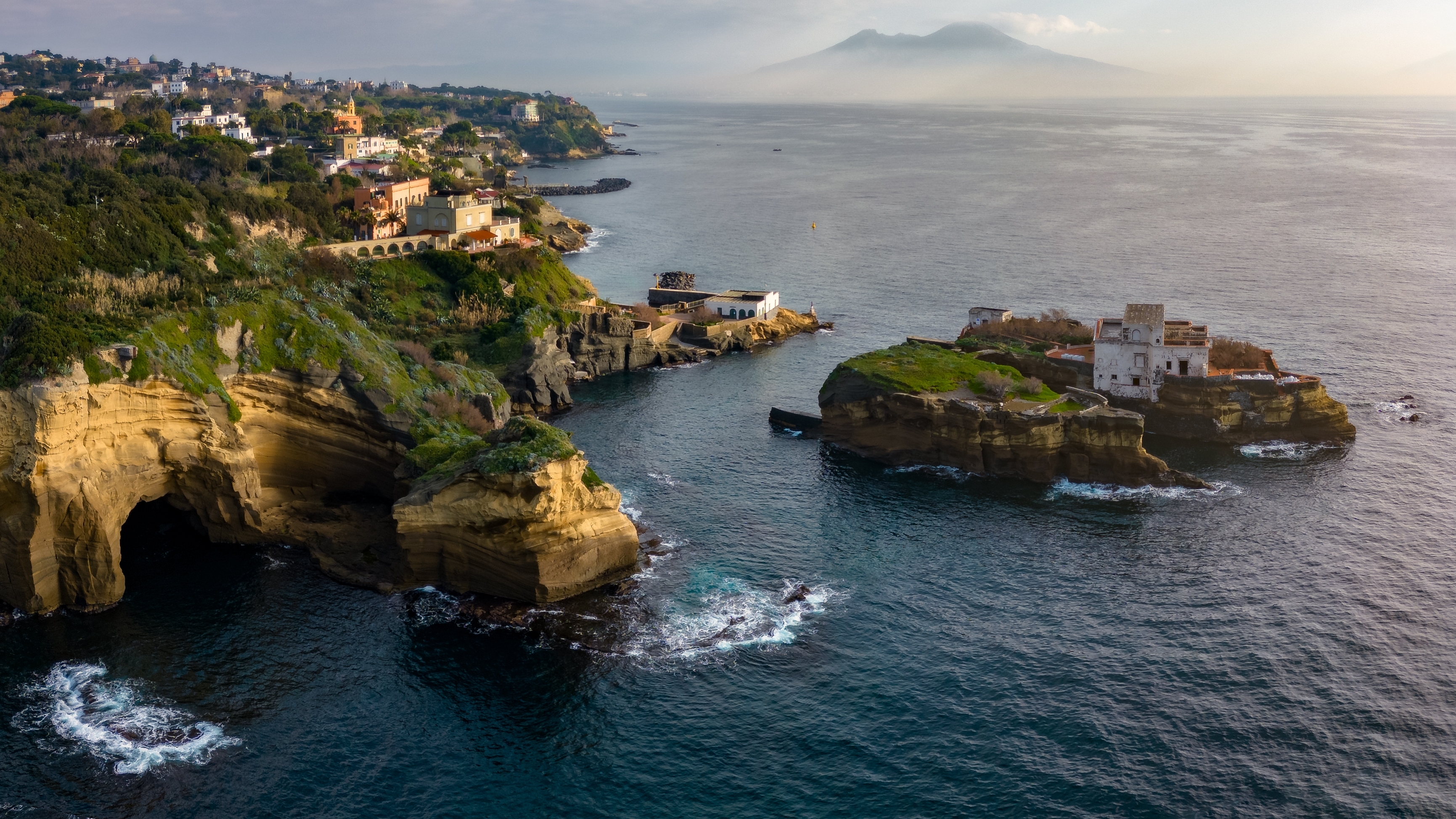
Isola La Gaiola
At the edge of the vibrant azure waters of the Tyrrhenian Sea, Isola La Gaiola emerges like a whispered secret from Naples' bustling coastline. This twin islet, tethered by a slender stone bridge, presents a haunting silhouette against a backdrop of rolling Mediterranean waves. The sun rises with a gentle caress, casting a golden glow that dances upon the island's timeworn ruins. As morning mists dissipate, the air fills with the briny scent of the sea intermingling with the earthy aroma of the isle's sparse vegetation. Here, silence reigns, save for the occasional cry of a black-headed gull and the subtle murmur of waves lapping the rocky shores.
Venturing closer, the island reveals its enigmatic charm, steeped in legends and draped in history. Once a retreat for Roman aristocrats, the remnants of their villas are now ghostly vestiges, their mosaics and columns bearing witness to times long past. The island's name itself, La Gaiola, is thought to derive from the Latin "caveola," referring to the numerous grottoes carved into its base. These secretive hollows whisper tales of ancient maritime rituals and hidden treasures, while their shadowy depths invite the imagination to explore mysteries lurking beneath the surface.
The island's history is as turbulent as the seas that surround it. Throughout the centuries, it has been a canvas for human ambition and despair. In the 19th century, the island was the home of a hermit known as "The Wizard," who lived in solitude, weaving spells in whispers carried by the wind. Local lore claims that a curse hangs over the island—a notion that gains traction when considering the misfortunes that befell its various owners. From unexpected deaths to financial ruin, the island's past is littered with tales of woe. This aura of mystery, combined with the island's rugged beauty, has transformed it into a place of intrigue and fascination.
Isola La Gaiola is uninhabited today, yet it is a sanctuary for nature, where flora and fauna reclaim the space once dominated by human hands. The jagged cliffs are adorned with wildflowers that defy the salt-laden winds, their colors a vivid contrast to the weathered stone. The island's coves shelter an array of marine life, offering glimpses of darting fish and the occasional octopus weaving through the watery underworld. Above, the sky hosts an ever-changing theater of clouds and light, a spectacle mirrored in the crystalline waters below.
For centuries, the island has been both a muse and a mystery to the people of Naples. Fishermen, casting their nets nearby, speak of the island with a mixture of reverence and superstition. They tell of a time when La Gaiola was a hub for secret meetings and clandestine activities, shielded by the island's remote allure. Yet, amidst the tales of curses and fortunes lost, there is an unspoken acknowledgment of the island's magnetic beauty—a beauty that draws the eye and stirs the soul.
In recent years, Isola La Gaiola has gained attention for its ecological significance. Marine biologists and conservationists are drawn to the island's pristine waters, which harbor a delicate ecosystem brimming with biodiversity. Efforts are underway to protect this fragile environment, ensuring that the island remains a refuge for wildlife and a natural wonder for future generations. This endeavor mirrors the broader Mediterranean struggle to preserve its unique marine habitats amidst the pressures of climate change and human encroachment.
Yet, it is the unexpected that continues to captivate those who venture to Isola La Gaiola. At dusk, as the sun retreats into the horizon, the island is bathed in a soft, ethereal light. Shadows stretch across the ancient ruins, and the air grows cool and laden with the scent of the sea. It is in these moments that the island's true essence is revealed—a place where time stands still, where the past and present coalesce in a delicate dance, leaving visitors awash with a sense of wonder and reflection.
As you contemplate the island from afar, the question lingers: What is it about this small fragment of land that holds such power over the imagination? Is it the legends of curses and lost fortunes, or the wild beauty of its natural landscapes? Perhaps it is the island's ability to remind us of our own ephemeral existence, of the way history ebbs and flows like the tides that shape its shores.
In the end, Isola La Gaiola remains an enigma—an island that defies easy explanations. Its story is one of contrasts: the harshness of its rocky terrain softened by the gentle lapping of the sea, the solitude of its uninhabited state animated by the vibrant life that teems around it. As you leave the island behind, the last rays of daylight fading, you carry with you the echo of its mysteries—a whisper that beckons you to return, to uncover the secrets hidden within its stony embrace, and to bear witness to the timeless dance of nature and history forever unfolding on its shores.
Isola La Gaiola is rumored to be cursed due to a series of unfortunate events including the mysterious deaths and financial ruin of several owners, including the suicide of a German industrialist in the 1920s.
The island is part of the Gaiola Underwater Park, featuring submerged Roman ruins and structures that hint at an ancient luxury villa, making it a hotspot for divers and history enthusiasts.
Despite its eerie reputation, Isola La Gaiola is remarkably close to the bustling city of Naples, just 30 meters from the mainland, yet it remains an enigmatic and secluded getaway.
Isola La Gaiola served as a filming location for the 1960s Italian film 'Il Mare', highlighting its hauntingly beautiful scenery that contrasts with its ominous lore.
The island is actually made up of two small islets connected by a singular, picturesque stone bridge, creating a visually stunning and iconic silhouette in the Tyrrhenian Sea.