World's Deadliest Island
Ilha da Queimada Grande is home to the golden lancehead pit viper, one of the deadliest snakes in the world. This island's dense snake population, estimated at one per square meter, makes it off-limits to the public.
Brazil
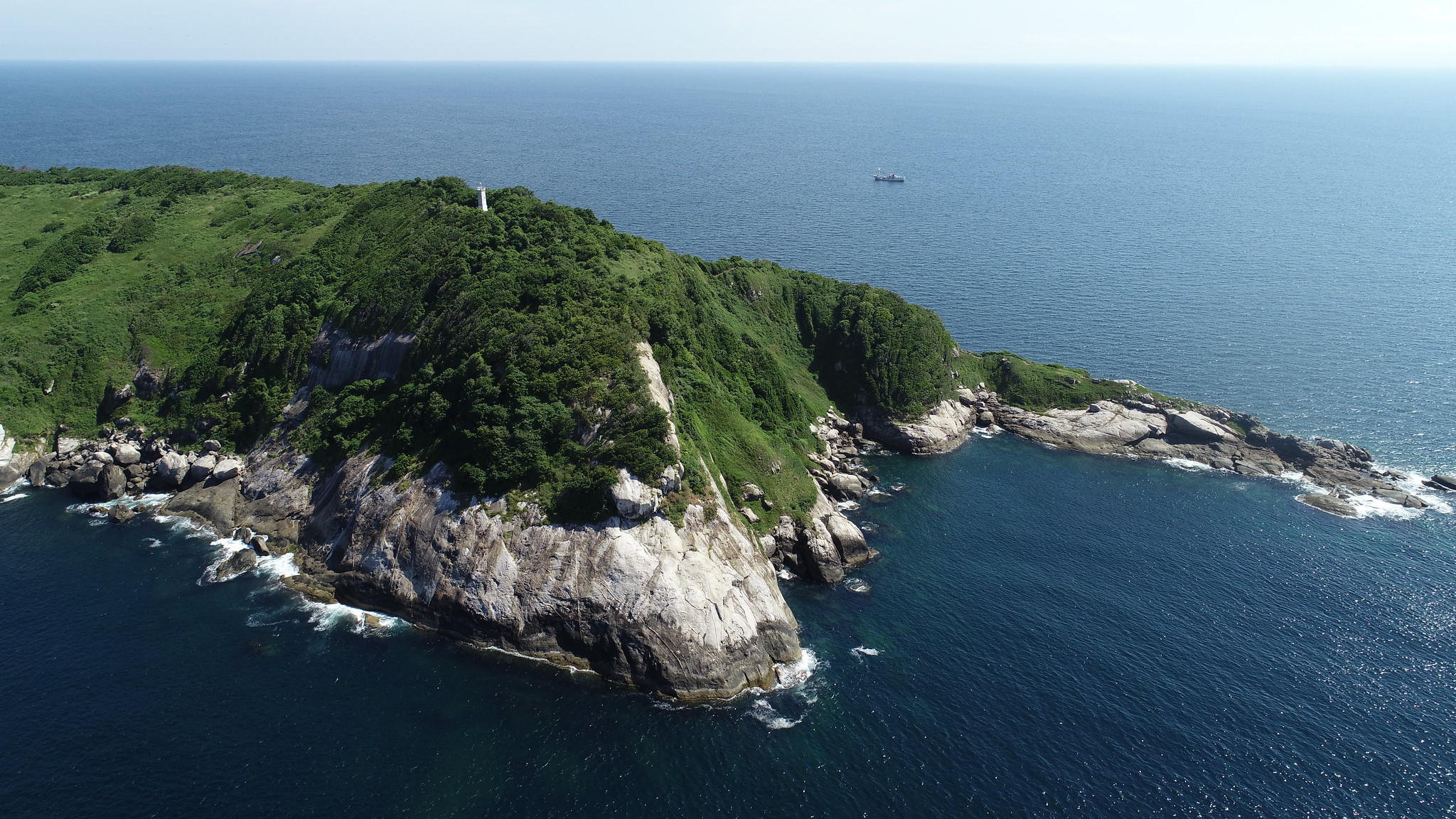
Ilha da Queimada Grande
Beneath a sun that blisters the azure cloak of the South Atlantic, Ilha da Queimada Grande rises, a jagged emerald shard adrift in endless blue. The island, a mere 21 miles off Brazil's coast, breathes with the solitude of the uninhabited. Mist weaves through tangled canopies of Atlantic rainforest, droplets clutching leaves like liquid pearls. The air is thick with the tang of salt and the occasional whisper of an ocean breeze that brings with it the low rumble of distant waves colliding with its rocky sentinel shores. Here, a secret world thrives—a place where time slumbers beneath leafy boughs and serpentine shadows.
As dawn unfurls across this isolated Eden, the island stirs with a symphony of life that exists nowhere else. Dark, foreboding cliffs are softened by the golden light of morning, revealing in their crevices the elusive golden lancehead. These vipers, with their striking patterns and lethal grace, draw researchers and thrill-seekers alike to this island, known colloquially as Snake Island. Each lancehead, coiled with muscle and myth, is a testament to evolution's art, their venom potent enough to make the heart race with both awe and fear. Against this backdrop, a lighthouse stands, its walls weathered by salt and time, a ghostly reminder of human hands that once tended its beaming eye.
The island's story is one woven with threads of survival and adaptation. Ilha da Queimada Grande, devoid of any human settlers, owes its eerie moniker to the lanceheads that dominate its ecological landscape. These snakes evolved in splendid isolation, their numbers exploding in the absence of predators. It is said that a colony of settlers once tried to tame the island, clearing its forest for agriculture—a venture abandoned to nature's reclaiming hands, the jungle swallowing fences and dreams alike. Today, the snakes are the sovereign rulers, their presence a cautionary tale writ in scales and silence.
Aboard the occasional boat that dares the island's rocky moorings, naturalists and scientists tread carefully, eyes scanning the undergrowth for the tell-tale ripple of a lancehead's movement. The island's biodiversity is as rich as it is peculiar. Birds flit through the canopy, their calls sharp against the hush, their feathers vivid under shafts of sunlight. The air is alive with the subtle hum of insects and the rustling leaves, a tapestry of life interwoven with threat and beauty. In this untouched realm, one finds a microcosm of Earth's past—a glimpse of what the world may have been before humanity's footprint became indelible.
The island's ecological significance is profound, its serpents a subject of study and respect. Researchers unravel the complexities of the golden lancehead's venom, a potential key to new medical breakthroughs. This biochemical arsenal, honed by isolation, may one day yield treatments for human ailments. Yet, the island remains a place of balance, a delicate dance between predator and prey, life and death, that holds its fragile ecosystem in equilibrium.
Ilha da Queimada Grande harbors mysteries as thick as its foliage, stories whispered by the wind and sea. Beneath its canopy, ancient roots twist through soil rich with decay, a testament to the cycles of life and rebirth. It is said that the spirits of those who once attempted to settle here linger in the shadows, their voices carried by the winds that sigh through the trees. These tales, part myth, part memory, weave an enigmatic tapestry as elusive as the island itself.
As the sun dips towards the horizon, casting long shadows across the island, a sense of timelessness settles over the landscape. The lighthouse, now automated and silent, stands as a sentinel over the twilight. Its beam cuts through the darkening sky, a testament to human endeavor and abandonment. The island, left to its wild inhabitants, continues its eternal cycle, a sanctuary for the bold and the curious who wish to glimpse a world before the hand of man sought dominion.
Ilha da Queimada Grande, in its solitude, offers a reflection on the delicate balance of our natural world. It is a reminder of the beauty that flourishes in isolation and the fragile boundaries between human ambition and nature's reclamation. As the waves sing their lullaby to the shore, and the chorus of nocturnal life awakens, one cannot help but ponder the future of this island. Will it remain a sanctuary for its serpentine inhabitants, or do the whispers of change linger on the horizon?
In the end, Ilha da Queimada Grande stands as a monument to nature's resilience and the mysteries that endure in the heart of the ocean. It is a place that defies understanding, a paradox of danger and beauty, where each shadow holds a story, and each sunrise brings hope. This island, whispered of in hushed tones, invites the brave to uncover its secrets, to learn from its silent lessons, and to carry its story to the world beyond.
Ilha da Queimada Grande is home to the golden lancehead pit viper, one of the deadliest snakes in the world. This island's dense snake population, estimated at one per square meter, makes it off-limits to the public.
Due to its isolation, the golden lancehead has evolved a potent venom capable of melting human flesh, providing researchers with valuable insights into snake evolution and venom properties.
The island's lighthouse, built in 1909 and automated in the 1920s, is rumored to have been abandoned after a lighthouse keeper and his family were allegedly killed by snakes.
Ilha da Queimada Grande's unique ecosystem, untouched by invasive species, offers a critical refuge for the golden lancehead and other endemic species, sparking conservation efforts to maintain its pristine condition.