Amelia Earhart's Last Stop
Howland Island was the intended destination for Amelia Earhart's ill-fated 1937 flight. Despite extensive searches, no trace of Earhart or her navigator Fred Noonan was ever found.
United States
Howland Island
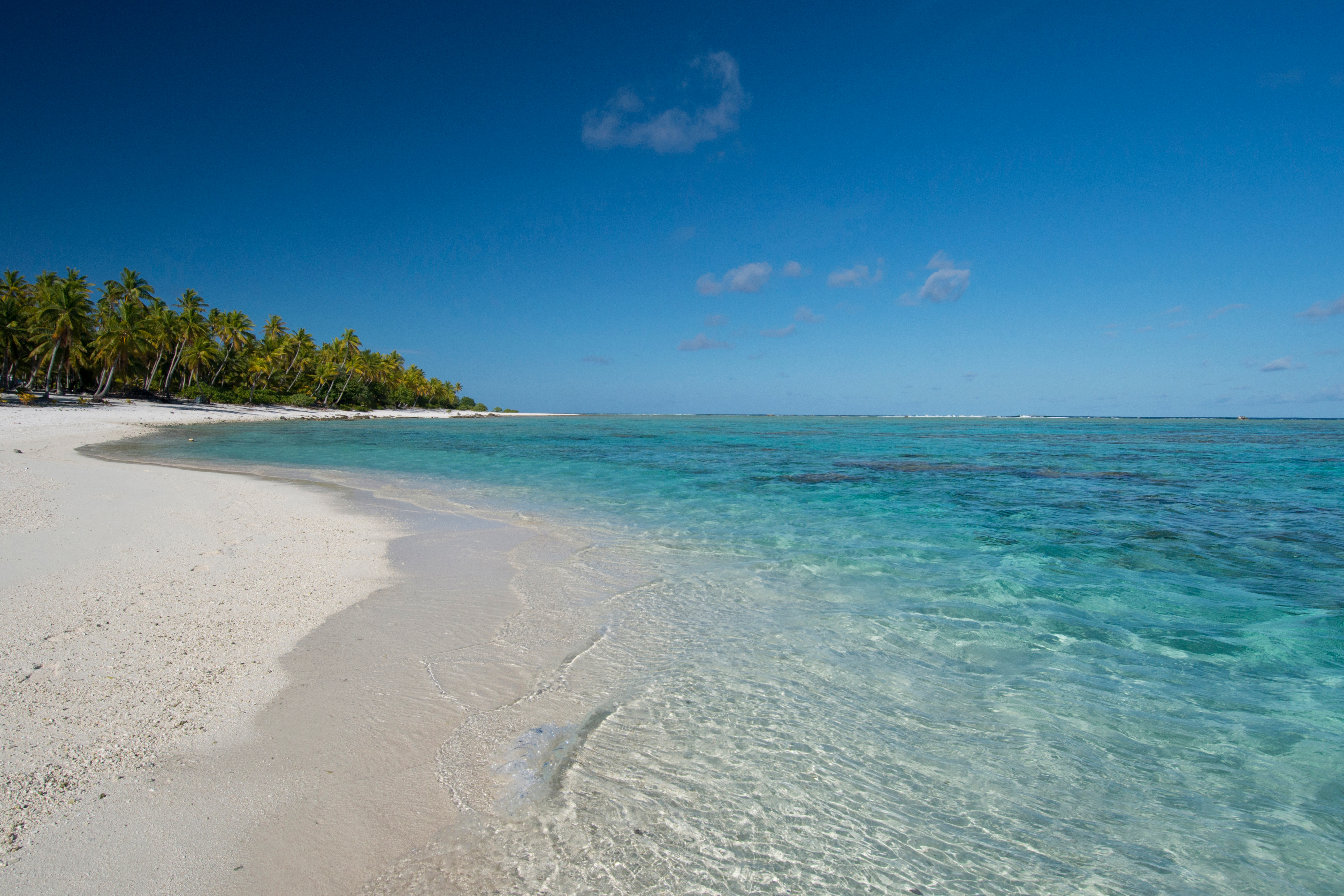
At the edge of the vast Pacific, where the ocean's indigo expanse meets the sky's azure embrace, lies a speck of land that few will ever see. Howland Island emerges from the waves as a solitary whisper of earth, carried by the relentless trade winds that have sculpted its shores for millennia. Here, just 1,700 acres of coral and sand exist as a testament to nature's quiet determination amid the world's largest ocean. As dawn breaks, the horizon blurs with hues of rose and gold, the first light catching the surf that ceaselessly caresses the island's perimeter. Howland, uninhabited and remote, stands as a reminder of the earth's forgotten corners, where time seems to stand still.
Approaching by sea, the island appears almost mirage-like, its low-lying profile barely distinguishable against the horizon. The air is filled with the tang of salt, and the calls of distant seabirds echo over the rhythmic crashing of waves against limestone. Stepping ashore, the ground feels warm, the coarse coral sand shifting beneath your feet. Here, the landscape is stark yet hauntingly beautiful, a place where nature reigns in its most primal form. Sparse grasses and tenacious shrubs cling to life, their roots anchored in the porous rock, while the occasional driftwood, bleached by sun and sea, tells tales of oceanic voyages from far-off lands.
History whispers through the island's wind, a narrative woven with exploration and ambition. Named after Captain George Howland of the whaling ship Isabella, the island found its place on maritime maps in the early 19th century. Yet, it is Amelia Earhart's ghost that most vividly haunts Howland's shores. Here, in 1937, the aviator aimed to land during her ill-fated attempt to circumnavigate the globe. On that fateful day, her Lockheed Electra disappeared into legend, leaving only questions in its wake. The island, with its solitary airstrip now overgrown and unused, remains a poignant reminder of human aspiration and the mysteries of the vast Pacific.
While devoid of permanent human habitation, Howland Island teems with life of a different kind. It is a sanctuary for seabirds, a cacophony of avian life where the black noddy and the sooty tern claim the skies. Their calls, sharp and clear, fill the air as they swoop and dive, painting the sky with their agile forms. The island also serves as a critical nesting ground for threatened turtle species, which return year after year to lay their eggs in the warm sands. These creatures, ancient and resilient, embody the island’s role as a bastion of biodiversity amidst the ocean's expanse.
The island's ecology is a fragile balance, a system harmonized by isolation but threatened by human encroachment and climate change. Rising sea levels slowly encroach upon the land, saltwater seeping into freshwater lenses, imperiling the delicate life that persists here. Yet, Howland endures, a testament to the resilience of nature in the face of adversity. This isolated ecosystem, safeguarded as a National Wildlife Refuge, offers scientists a living laboratory, a place to study climate impacts and conservation efforts in real time.
In the absence of human voices, Howland Island's past lives on through the artifacts left behind. Rusting remnants of the early 20th-century colonization efforts linger, half-buried in sands that shift with every tide. These remnants, like the skeletal remains of an old lighthouse, speak of a time when hope thrived in the form of the American Equatorial Islands Colonization Project. Here, young men once eked out an existence in the 1930s, attempting to forge a community in anticipation of territorial claims. Their dreams faded, leaving behind stories etched into the island's history, a testament to ambition and the harsh realities of isolation.
As the sun sets, casting long shadows across the island, a serene stillness settles over Howland. The sky blazes with an array of colors—fiery oranges and deep purples fading into the inky blue of an equatorial night. Stars emerge, pinpoints of light in the velvety dark, unspoiled by artificial glow, offering a glimpse into the universe's infinity. It is under this celestial canopy that the true essence of Howland Island unfolds—untouched, steadfast, a solitary witness to the passage of time.
Howland Island is more than an isolated outpost; it is a narrative of nature's tenacity and humanity's fleeting imprints. It poses questions of conservation and legacy, asking us to reflect on our place within the vastness of the world. What stories will future generations uncover in this oceanic solitude? As climate change continues to threaten such untouched places, Howland stands as a reminder of what we stand to lose—a call to cherish and protect the Earth's wild and wondrous places. Here, amid the Pacific's endless horizons, Howland Island persists, a beacon of history and hope in an ever-changing world.
Howland Island was the intended destination for Amelia Earhart's ill-fated 1937 flight. Despite extensive searches, no trace of Earhart or her navigator Fred Noonan was ever found.
During WWII, Howland Island was fortified by the US military, leaving behind relics like bunkers and an airstrip, now overgrown and abandoned, serving as a stark reminder of its strategic importance.
Although no one lives on Howland Island, it is part of the Pacific Remote Islands Marine National Monument, protecting its unique coral reefs and rich marine life.
Despite its equatorial location, Howland Island is arid, receiving less than 1,000 mm of rain annually, creating a stark environment with sparse vegetation.
Howland Island's beaches are crucial nesting grounds for threatened species such as the green and hawksbill sea turtles, offering a sanctuary far from human interference.