Largest Sea Bird Colony
The Farallon Islands host the largest seabird breeding colony in the contiguous United States, with an estimated 300,000 birds, including the rare tufted puffin.
United States
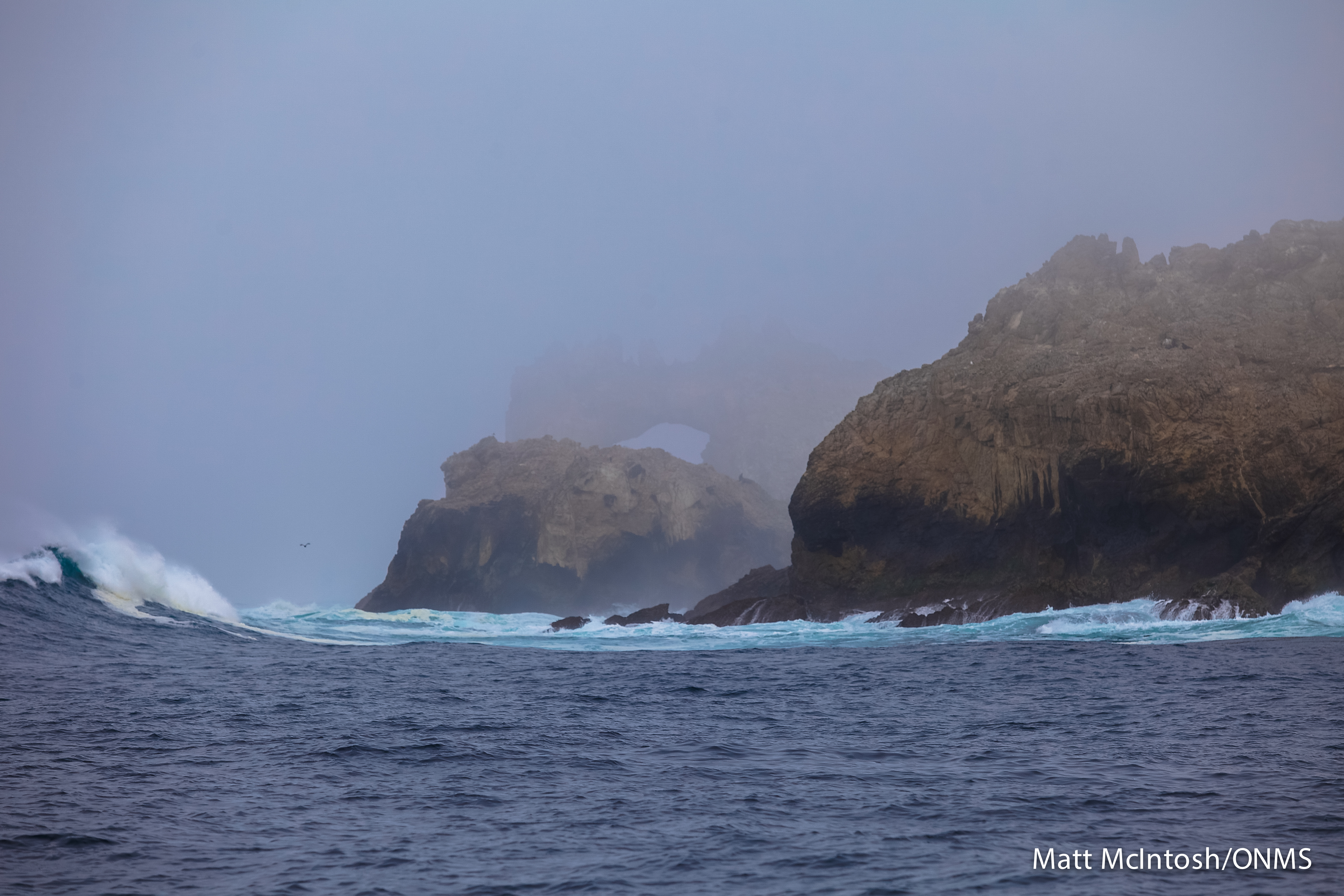
Farallon Islands
In the shifting fog of the Pacific Ocean, where the horizon melts into an infinite haze, the Farallon Islands emerge like spectral sentinels. Often shrouded in mist, these islands, a mere 27 miles off the coast of San Francisco, are a world apart. The air here is saturated with the brine of the sea, a crisp and sharp scent that clings to the rocky shores. As the sun struggles to pierce the heavy marine layer, it casts an ethereal glow on the jagged contours of the islands, transforming them into silhouettes against a backdrop of vast, rolling ocean.
The Farallones, sometimes referred to as the "Devil's Teeth" due to their unforgiving terrain, are a study in contrasts. The sea churns violently against the rocks, the sound of crashing waves a constant, rhythmic roar that vibrates through the bones. Seabirds, numbering in the hundreds of thousands, wheel and cry, their calls piercing the ocean's symphony. Here, nature reigns supreme, an untamed wilderness that has long resisted human settlement.
These islands have witnessed the ebb and flow of human ambition and retreat. In the mid-19th century, during the Gold Rush, the Farallones became vital as egg collectors risked life and limb to harvest murre eggs, coveted delicacies in burgeoning San Francisco. This perilous trade, marked by treacherous climbs on slick rocks and frequent skirmishes, ultimately led to the near decimation of the bird populations, an ecological lesson etched into the rocky cliffs.
Today, the islands are a sanctuary, protected as part of the Farallon National Wildlife Refuge. They serve as a crucial breeding ground for countless marine species. The cold, nutrient-rich waters surrounding the islands team with life, drawing migrating whales, playful sea lions, and the stealthy shadows of great white sharks. The latter glide silently beneath the waves, their presence a reminder of the primal hierarchy of the ocean. Researchers, carrying the legacy of exploration, venture here not to conquer but to understand, their observations contributing vital data to the global understanding of marine ecosystems.
Beneath the waves, the underwater landscape is as dramatic as the above-water topography. Kelp forests sway in the currents, their long strands creating a verdant underwater jungle that teems with life. The rhythm of the ocean is unending, a pulsing, living entity that nurtures and challenges in equal measure.
The Farallon Islands are not a place of human stories, but they echo with the voices of those who dared to reach these shores. The stories of lighthouse keepers, solitary and stoic, who once braved the elements to guide ships through the fog, linger like the ghosts of sea mist. Their lives were marked by isolation and resilience, lives entwined with the rhythm of the sea and the cries of the gulls.
Despite the islands' imposing presence, their true magic lies in the small details. Lichens paint the rocks in shades of orange and green, while tidal pools reveal worlds within worlds, where hermit crabs scuttle and anemones sway gently, their colors vibrant against the muted palette of the rocks. These miniature ecosystems offer a quiet reflection of the islands' larger narrative—a story of survival, adaptation, and interdependence.
As the day wanes, the fog lifts momentarily, revealing the sun dipping towards the horizon. Its dying light casts long shadows across the islands, painting the rugged landscape in hues of gold and violet. The wind, ever-present, carries the salty tang of the sea and the rich, earthy aroma of the guano-covered rocks, a reminder of the islands' avian inhabitants.
Standing on the edge of the world, you feel the timelessness of this place. The Farallones are a stark reminder of the raw power of nature and the delicate balance that sustains life. Here, where land meets sea in a dramatic clash, one cannot help but reflect on humanity's place in this vast tapestry. These islands, both forbidding and beautiful, tell a story that transcends human history, a narrative written by wind and wave, observed by those who venture close enough to listen.
In the quiet moments before dusk, as the light fades and darkness envelops the islands, a profound stillness settles. The Farallon Islands, remote and enigmatic, are a testament to the resilience of life in all its forms. They stand as guardians of the Pacific, a reminder of the mysteries that lie just beyond our reach, beckoning us to explore and protect the world around us.
The Farallon Islands host the largest seabird breeding colony in the contiguous United States, with an estimated 300,000 birds, including the rare tufted puffin.
These islands are one of the few places where great white sharks can be observed in large numbers, drawn by the abundant seal population, especially during the fall months.
The Farallon Island Lighthouse, built in 1855, is one of the oldest on the West Coast, and its light once guided ships through the perilous waters around San Francisco.
Access to the Farallon Islands is heavily restricted to protect the fragile ecosystems, with only scientists and authorized personnel allowed, making it one of the most inaccessible places off the California coast.
Beneath the waves near the Farallon Islands lie barrels of radioactive waste, dumped there by the U.S. government during the Cold War, a controversial decision that sparks environmental debates to this day.