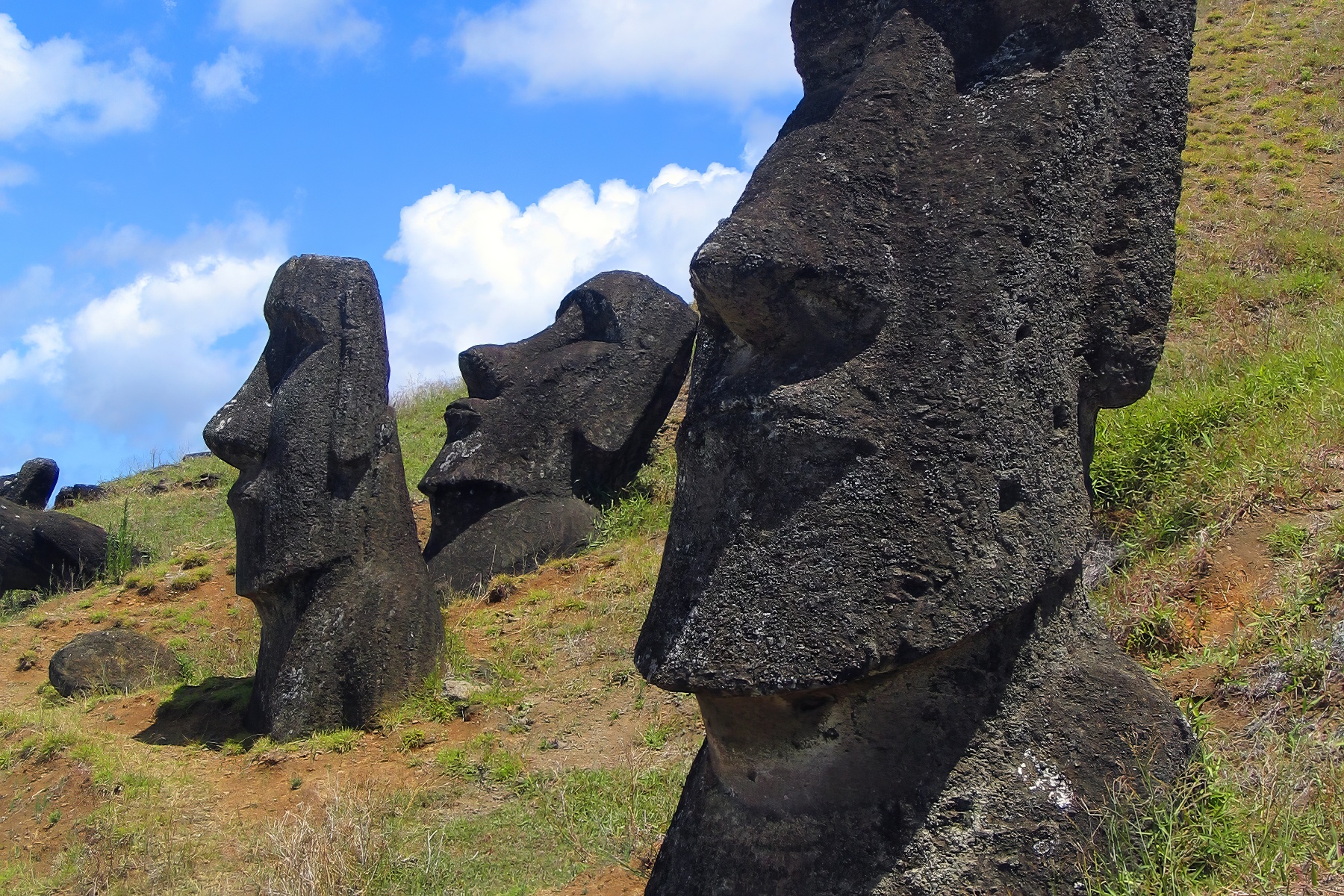
At dawn, Easter Island emerges like a solitary sentinel in the vast expanse of the Pacific Ocean. As the first rays of sunlight caress its rugged coast, shadows stretch across the enigmatic moai statues that dot the landscape—massive, silent sentinels carved from volcanic tuff. The island, known locally as Rapa Nui, stands isolated, some 2,300 miles from the coast of Chile, an emerald jewel adrift in a cobalt sea. The air is thick with the scent of salt and earth, mingling with the sweet aroma of the island's native guava trees. Beneath the cries of seabirds circling above, the rustle of palm fronds dances to the rhythm of the trade winds, whispering stories of an ancient past.
Step onto its soil, and you're enveloped by the island's mystique. The vibrant blue of the ocean contrasts starkly with the lush greens of the rolling hills, creating a palette as vivid as it is serene. Here, the landscape is a canvas painted by time and nature, where the iconic moai, each uniquely weathered and worn, gaze stoically inland, their expressions carved with the hands of forgotten ancestors. These monolithic figures, some standing up to 33 feet tall, remain a testament to the island's rich cultural tapestry, a silent dialogue between earth and sky.
Easter Island's history is woven with threads of ingenuity and resilience. It is believed that the Polynesian navigators first arrived around 1200 AD, their canoes guided by the stars and ocean swells—a testament to human determination and the spirit of exploration. The Rapa Nui people, isolated from the world, crafted a thriving society, their lives intricately connected to the land and sea. They developed their own script, Rongorongo, a mysterious glyph system that remains undeciphered, each symbol a potential key to the island's past. Yet, as their civilization reached its zenith, it was met with environmental challenges and societal shifts, a narrative etched in the very stones that dot the island.
The moai, carved between the years 1400 and 1650, embody the islanders' devotion to their ancestors. Each statue was painstakingly transported from quarry to ahu, the ceremonial platforms that overlook the ocean. The process of moving these colossi remains one of the island's greatest mysteries. Some legends speak of divine powers, others suggest the use of wooden sledges and ropes—a testament to the ingenuity of the Rapa Nui. Standing before these giants, you can almost feel the hum of ancient chants and the distant echoes of a thriving civilization.
Yet the island is more than its statues. The volcanic craters of Rano Kau and Rano Raraku, now lush with vegetation, cradle ecosystems teeming with life. The air is alive with the sound of native birds, like the Rapa Nui reed warbler, their songs a melodious testament to the island's biodiversity. As you wander the paths that weave through these craters, the ground beneath your feet feels like a living tapestry, rich with the history of eruptions that shaped this land.
Easter Island's cultural heartbeat is palpable in its people, the descendants of the original Polynesian settlers. The Rapa Nui's connection to their heritage is preserved in their vibrant music, dance, and art. The Tapati Festival, a celebration of Rapa Nui culture held every February, transforms the island into a living museum, where cultural traditions are not only remembered but rejuvenated. From traditional canoe races to intricate body paint competitions, every event is a vibrant expression of identity and pride.
The island's isolation has not insulated it from the modern world's challenges. Environmental concerns, such as deforestation and erosion, mirror those faced by the island's ancestors. Yet, the community is resilient, engaging in conservation efforts to protect their home. The Rapa Nui National Park, a UNESCO World Heritage Site, stands as a beacon of preservation, safeguarding the island's natural and cultural treasures for future generations.
As twilight descends, Easter Island is bathed in the soft glow of a setting sun, and the moai cast long shadows across the earth, as if reaching towards the past. The sky ignites with hues of pink and orange, reflecting off the waves that lap gently at the shore. In that moment, one can't help but ponder the island's mysteries—how a people so isolated crafted a society of such complexity, how their legacy endures in stone, and what future awaits this remote paradise.
Easter Island's story is one of survival and adaptation, a narrative etched in its landscape and its people. It stands as a reminder of humanity's capacity for both creation and destruction, of the delicate balance between nature and culture. As you depart its shores, the island's whisper lingers—a call to remember and to honor the lessons of the past, a plea to ensure that its story, like its statues, remains standing against the passage of time.