Largest Uninhabited Island
Spanning over 55,000 square kilometers, Devon Island is the largest uninhabited island on Earth, offering a glimpse into the untouched Arctic wilderness.
Canada
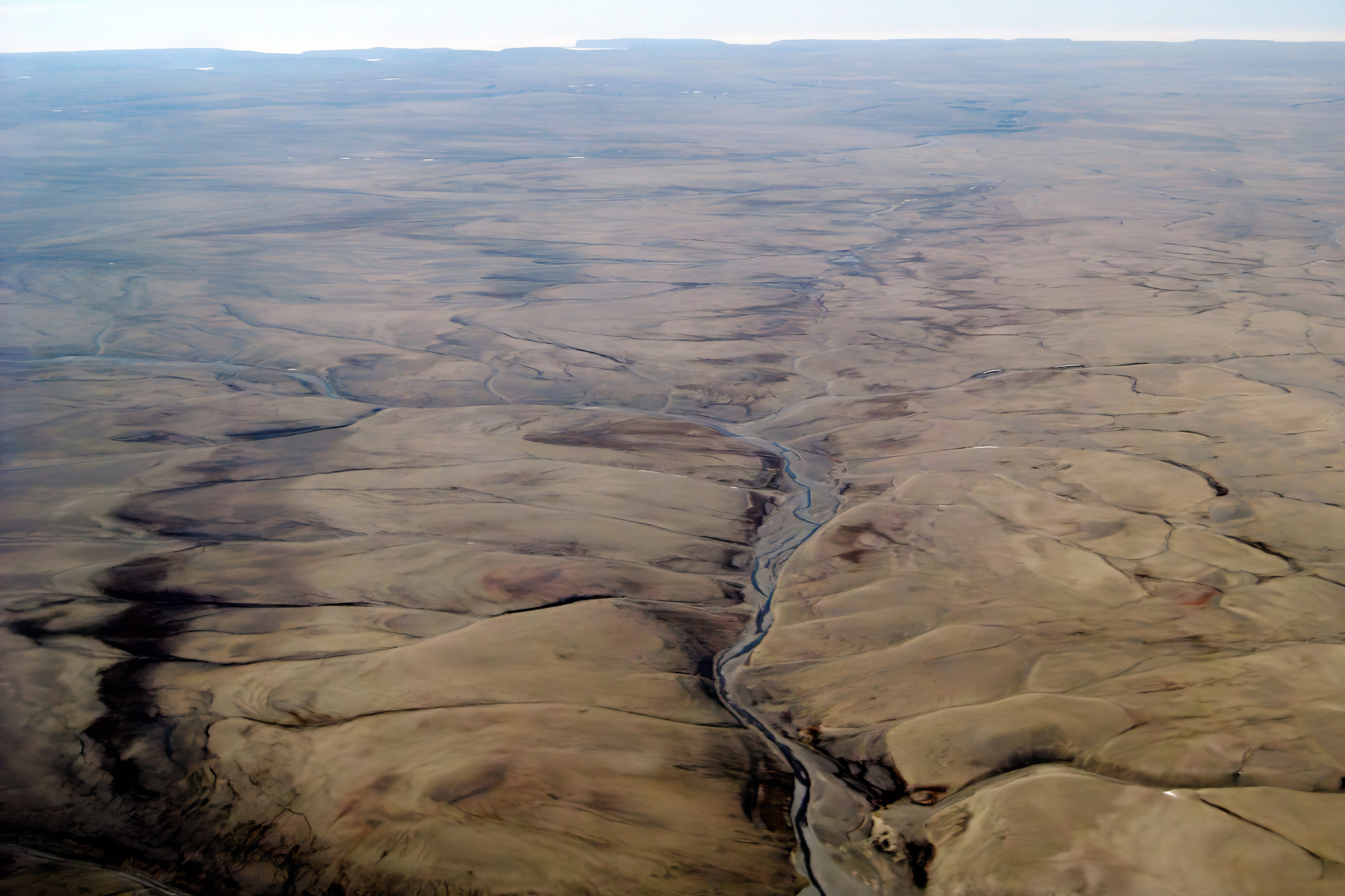
Devon Island
At first light, Devon Island emerges from the Arctic gloom like a forgotten world locked in the embrace of time. Perched at the top of the planet, this formidable expanse of ice and rock lies adrift in the frigid waters of the Canadian Arctic Archipelago. The island stretches vast and desolate, a frozen behemoth, its surface a mosaic of stark white ice fields and rugged, sepia-toned tundra—a place where Earth whispers its history through the language of ancient glaciers and windswept plains. In the crisp morning air, the faint aroma of moss and lichens mingles with the sharp scent of sea salt carried by the gusty northern winds.
Beneath the unyielding surface of Devon Island, history is etched into every crevice and cliff face. This uninhabited land, the largest uninhabited island in the world, occupies a space where time stands still. The island's rugged beauty is not merely a visual feast but a chronicle of millennia, a testament to a time when the planet was raw and untamed. As the Arctic sun inches higher, casting long shadows across the landscape, the sound of distant ice cracking reverberates like a solemn drumbeat, resonating with the tales of the island's prehistoric past.
The island's historical tapestry is woven with the stories of the Thule and Dorset cultures, who once thrived amid its icy expanses. These ancient peoples, ancestors of today's Inuit, navigated these treacherous waters and harsh landscapes with unparalleled skill, leaving behind remnants of their existence—stone tools, abandoned campsites, and haunting petroglyphs that hint at lives lived in harmony with the relentless Arctic environment. It is a place where the echoes of human endurance remain, though the voices have long since faded.
Devon Island's stark isolation has preserved its natural wonders, making it a living laboratory for scientists and adventurers alike. Here, where the sun barely dips below the horizon in summer and vanishes entirely in winter, NASA conducts experiments preparing for life on Mars. The island’s Haughton Crater, a huge impact site created some 39 million years ago, bears an uncanny resemblance to the Martian landscape. This striking resemblance provides researchers with an invaluable opportunity to simulate extraterrestrial exploration, their tents dotting the landscape like outposts on an alien world. The tactile sensation of the rocky terrain underfoot, coupled with the eerie silence that surrounds, evokes the sense of stepping onto another planet.
Amidst this barren grandeur, wildlife ekes out a tenacious existence, painting the monochrome landscape with bursts of life. Muskoxen, with their shaggy coats, traverse the tundra in small herds, their gentle grunts and the thud of their hooves breaking the stillness. The Arctic fox, ghostly white against the snow, slips silently across the landscape, its keen eyes ever watchful for prey. Above, the sky is punctuated by the cries of seabirds—fulmars and kittiwakes—whose nests cling precariously to the island’s towering cliffs.
The island's flora is a study in resilience. Tiny saxifrages and Arctic poppies peek through the gravelly soil, their fragile blooms stark against the harsh backdrop, while lichens, ancient and unyielding, blanket the ground in a patchwork of earthy hues. With each passing season, the island transforms—from the blinding purity of winter's snow to the subtle greens and browns of the brief Arctic summer, where the sun hangs low on the horizon, bathing the landscape in a perpetual twilight.
Despite its apparent desolation, Devon Island holds a trove of secrets that captivate the imagination. The island's many fjords and hidden inlets, their waters dark and mysterious, invite exploration. It is said that the spirits of the departed linger here, in the howling of the wind and the shifting shadows across the tundra. Such tales, woven into the fabric of Inuit mythology, lend the island an air of timeless intrigue, a place where the veil between the seen and unseen is gossamer thin.
As one stands upon this remote edge of the world, where the elements reign supreme, there is an overwhelming sense of nature's enduring power. The Arctic—harsh, unforgiving, and breathtakingly beautiful—lays bare the insignificance of human life, while simultaneously highlighting our innate curiosity and drive for understanding. The interplay of light and shadow across Devon Island's stoic landscape evokes a sense of solitude that is both humbling and exhilarating.
In departing Devon Island, one carries with them more than memories; they leave with a profound appreciation for the planet's untouched realms. Here, where the past and future intertwine seamlessly, the island stands as a silent guardian of Earth's history and a beacon for the secrets of our cosmic neighbors. As the Arctic winds sweep across its frozen expanse, one is left to ponder: in a world of incessant change, what stories will Devon Island tell to those who come after us? Will it remain a pristine canvas of Earth's past, or will it become a harbinger of the future that awaits humanity in the stars?
Spanning over 55,000 square kilometers, Devon Island is the largest uninhabited island on Earth, offering a glimpse into the untouched Arctic wilderness.
Devon Island hosts the Haughton Mars Project, where NASA conducts research due to its Mars-like terrain, making it a vital training ground for future Mars missions.
Despite its icy location, the island features a polar desert environment with annual precipitation similar to that of the Sahara, showcasing a unique arid landscape.
The Haughton Crater, formed by a meteor impact 39 million years ago, provides scientists with invaluable insights into crater formation and Earth's geological history.
Traces of an abandoned Inuit settlement from the Thule culture, dating back to 1000 AD, can still be found, offering a glimpse into the life of early Arctic inhabitants.