World's Smallest Inhabited Atoll
Clipperton Atoll is the smallest atoll on the planet to have been inhabited by humans, with a maximum land area of just 6 km². Despite its size, it has a unique history of human settlement that ended in tragedy.
France
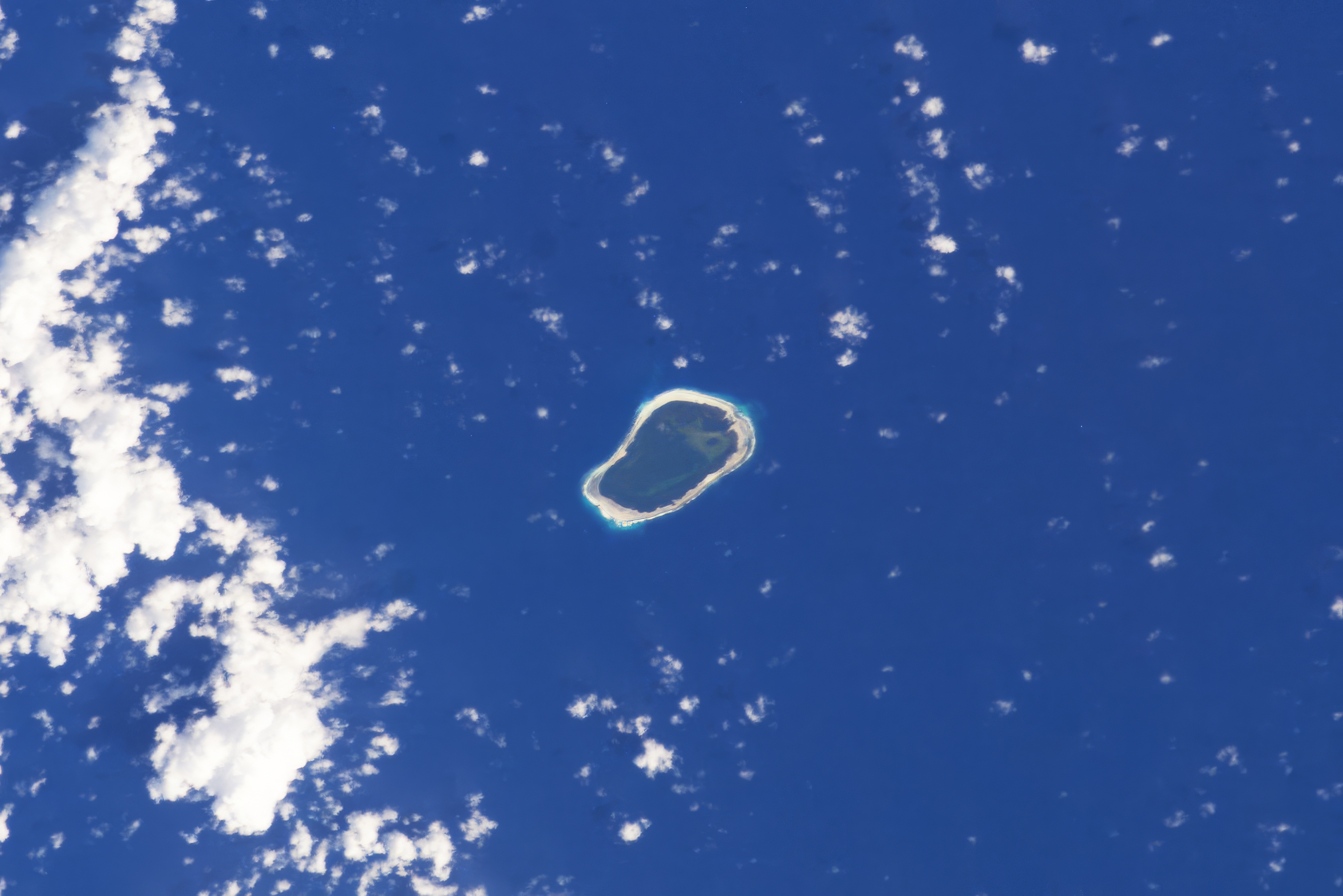
Clipperton Atoll
The ocean stretches endlessly, a seamless expanse of cerulean and turquoise that merges into a horizon where the sky and sea embrace. Here, in the vast solitude of the eastern Pacific Ocean, lies the enigmatic Clipperton Atoll—a coral ring barely peeking above the waves, a forgotten whisper of land 670 miles off the coast of Mexico. At dawn, the island emerges from a misty veil, its shimmering lagoon reflecting the first light like a sapphire cradled in coral arms. The salt-laden breeze kisses your face, carrying with it the distant cries of seabirds—a sound both ancient and eternal.
Step onto its sun-bleached sands, and an overwhelming sense of isolation envelops you. The air is thick with the scent of the ocean, mingling with the earthy perfume of seaweed strewn across the shore. Clipperton’s beauty is stark, raw, untouched by human habitation for decades. Its only testament to human presence is the rusting remnants of a lighthouse, standing like a solitary sentinel against the encroaching elements. This is a place where nature reigns supreme, where time seems suspended, marking not the hours, but the slow passage of tides.
Clipperton Atoll's history is a tapestry woven with tales of ambition and abandonment. Named after the English pirate John Clipperton, who reportedly used it as a hideout in the early 18th century, the island has been a beacon for explorers and adventurers. In the early 1900s, it was claimed by France and later became the site of a tragic Mexican colony, where dreams of prosperity were dashed by isolation and starvation, leaving behind only ghosts and the echoes of their struggles.
The natural allure of Clipperton lies in its diverse ecosystems, a sanctuary for life in its most unadulterated form. The atoll's lagoon, vibrant and teeming with life, is home to an array of marine species. Schools of vivid parrotfish dart beneath the surface, their scales catching the sunlight in a kaleidoscope of colors. The surrounding coral reefs, a submerged city of twists and spirals, host a myriad of creatures—from the graceful manta rays gliding silently to the elusive hammerhead sharks patrolling their watery domain.
Above water, the island plays host to an avian paradise. The air thrums with the cacophony of frigatebirds and boobies, their wings slicing through the sky as they wheel and dive. Over 100,000 masked boobies nest here, their stark white feathers a contrast against the vibrant blues and greens of this isolated haven. The island’s birdlife is a feast for the senses, every call and cry a note in the symphony of Clipperton's untamed wilderness.
Yet, the island is not only a marvel of natural beauty; it is also a place of scientific intrigue. Researchers are drawn to Clipperton for its unique position as a living laboratory. The atoll's isolation makes it an ideal site for studying coral ecosystems and the effects of climate change. Here, scientists unravel the stories told by the island's flora and fauna, each discovery a thread in the greater narrative of our planet’s ecological tapestry.
Despite its uninhabited status, Clipperton’s fate is intricately linked to human actions. The atoll is a microcosm of the environmental challenges facing our world—rising sea levels, plastic pollution, and the delicate balance of marine ecosystems. Conservationists advocate for its protection, urging a stewardship that honors both the island’s past and its potential future. It beckons to us as a reminder of nature's resilience and fragility, a testament to the interconnectedness of all things.
As the sun begins its descent, casting long shadows across the sands, Clipperton Atoll transforms once more. The sky ignites in hues of orange and pink, a celestial painting mirrored in the lagoon’s still waters. The air cools, and the persistent thrum of the ocean becomes a lullaby. In this moment, as day succumbs to night, the island feels suspended in time, a solitary gem in an endless sea.
Clipperton Atoll is a place of paradoxes—a haven and a desolation, a sanctuary and a challenge. It invites us to ponder the nature of isolation, the tenacity of life, and the enduring power of the wild. As we leave its shores, the island lingers in our thoughts, a silent ambassador of the unyielding beauty and mystery of our world’s most remote places. In the dance of light and shadow upon its waters, we glimpse not only the island’s past echoing through its ruins but also a future shaped by the choices we make today.
Clipperton Atoll is the smallest atoll on the planet to have been inhabited by humans, with a maximum land area of just 6 km². Despite its size, it has a unique history of human settlement that ended in tragedy.
The atoll's central lagoon is home to a unique species of orange-colored fish, Xanthichthys ringens, which have adapted to the isolated saline environment, baffling marine biologists with their vibrant hue.
In the early 20th century, Clipperton Atoll was at the center of an international dispute between France and Mexico, culminating in a ruling by King Victor Emmanuel III of Italy in 1931 that awarded the atoll to France.
Clipperton Atoll was once part of a lucrative guano mining operation in the 19th century, with the deposits highly sought after as fertilizer. The industry collapsed after synthetic alternatives became available.
The atoll is home to a derelict lighthouse, built in 1917 and abandoned shortly after. Its construction was intended to guide ships but now stands as a haunting monument to the island's forgotten past.