Uninhabited Frozen Wilderness
Bouvet Island is considered the most remote island on Earth, lying about 1,000 miles away from the nearest landmass, with a harsh environment that remains uninhabited due to its icy conditions.
Norway
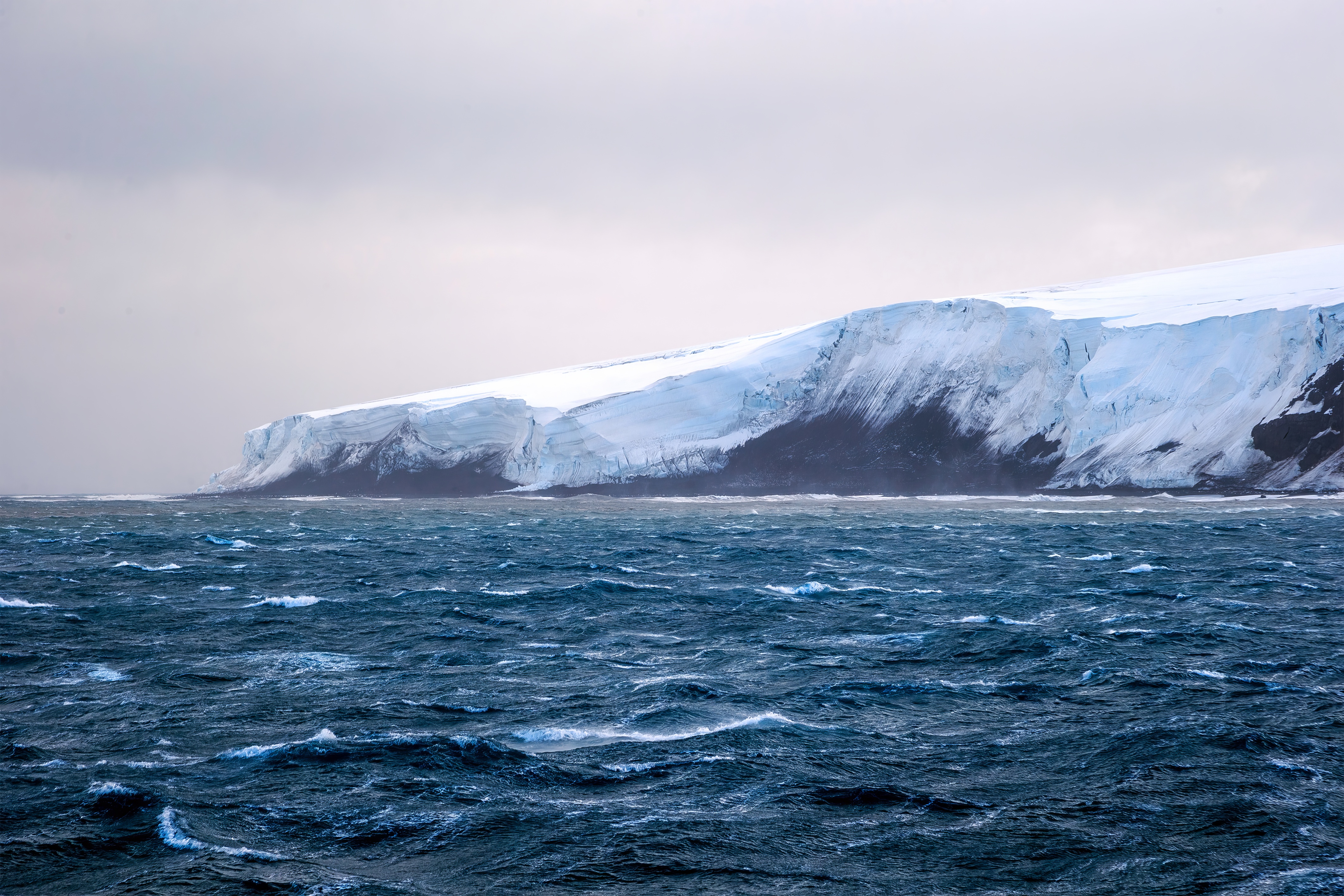
Bouvet Island
At the edge of the South Atlantic, where the ocean is a vast canvas of grays and blues, lies Bouvet Island—a solitary fragment of land, veiled in mystery, and swathed in the ceaseless whispers of the Southern Ocean's tempestuous winds. Here, 1,600 miles from the nearest inhabited shore, the sea churns relentlessly against cliffs of volcanic rock, their surfaces ashen and ancient beneath a cloak of fog. The island is a sentinel in isolation, a Norwegian outpost far removed from the familiar hum of human life. Its presence is a stark reminder of nature's indomitable force, a place where the world feels both ancient and uncharted.
The air is dense with the scent of brine, mingled with the metallic tang of chilled rock. As the first light of dawn pierces the horizon, the island's glaciers catch the sun like a prism, sending shafts of fractured light skittering across the tumultuous waves. Bouvet, crowned by its dormant volcano, Olavtoppen, rises majestically 780 meters into the sky—a silent guardian over this icy domain. As you step onto its frozen expanse, the crunch of snow beneath your boots is the only sound amid a profound, all-encompassing silence, broken only by the distant cries of seabirds wheeling high above, their calls echoing off cliffs etched by millennia of isolation.
The island's history, though sparse, is woven with tales of exploration and intrigue. First sighted by French naval officer Jean-Baptiste Charles Bouvet de Lozier in 1739, it remained elusive for nearly a century, wrapped in myth and the merciless grip of polar storms. Later, explorers and whalers sought its shores, though few dared linger long. A British expedition in the 1820s claimed it briefly, drawn by the allure of its untouched wilderness, only to abandon it to the elements once more. It was not until the mid-20th century that Norway, intrigued by its strategic position, laid claim to this desolate isle, declaring it a nature reserve, its secrets preserved beneath layers of ice and time.
Bouvet Island is a sanctuary for wildlife, a fragile ecosystem thriving in isolation. The rocky shores are home to colonies of seals, their sleek bodies glistening in the crisp air as they lounge on ice floes. Elephant seals, those lumbering behemoths of the polar seas, gather in noisy throngs, their bellows resonating like a primal symphony. Above, the sky is alive with the flutter of wings as petrels and shearwaters soar, masters of a domain where the earth seems an afterthought to the vastness of the sea and sky.
Life here is a testament to resilience. Beneath the island's icy surface, a delicate balance of life persists. Lichens cling to stone, vivid patches of green and orange against the monochrome landscape, while mosses find purchase in crevices, tenacious and enduring. These simple organisms compose the bedrock of a fragile ecosystem, providing sustenance to the island's few inhabitants. The krill-rich waters surrounding Bouvet are a lifeline, drawing whales on their migratory paths—a gentle ballet in the ocean's depths, unseen by human eyes.
This island, uninhabited and largely unexplored, stirs the imagination with its mysterious allure. The remnants of an abandoned Norwegian weather station stand testament to human curiosity, now weathered by years of snow and salt. Its walls, once vibrant with the ambitions of the people who braved this remote outpost, now whisper stories of solitude and endurance. Here, within this forsaken structure, one can almost hear the echo of their footsteps, the low murmur of voices carried away by the wind—a human touch in a place that seems to defy civilization.
In summer, when the sun hovers just above the horizon, casting long shadows that play across the ice, Bouvet transforms. The glaciers reveal their fractured beauty, their surfaces glistening like diamonds scattered across the land. The air, though still cold, feels lighter, imbued with the promise of life dormant beneath the snow. Yet, even in this brief reprieve, the weather is capricious—a reminder of the island's unforgiving nature, where storms can rise without warning, sweeping the landscape into a frenzy of white and gray.
As you stand on Bouvet's shores, you feel a profound connection to the planet's wild heart, a place untouched by the ceaseless march of progress. It is a reminder of the earth's raw beauty and the delicate balance that sustains life in its most extreme form. The island's future, much like its past, remains uncertain. As climate change threatens polar regions, Bouvet's icy façade faces an uncertain future, its glaciers retreating like silent witnesses to a warming world.
Bouvet Island is a place of paradox—a land that is both a desolate wilderness and a cradle of life. It invites reflection on humanity's place within the natural world, a reminder that even in the most remote corners of the globe, the impact of our actions reverberates. As you depart its shores, the island leaves an indelible mark on your soul—a testament to the enduring spirit of nature and the quiet, unyielding strength of a world apart. In its solitude, Bouvet Island remains an enigma, a place where the elements reign supreme and where the echoes of past explorers linger in the wind.
Bouvet Island is considered the most remote island on Earth, lying about 1,000 miles away from the nearest landmass, with a harsh environment that remains uninhabited due to its icy conditions.
In 1964, a lifeboat was discovered on Bouvet Island with no trace of its occupants, sparking theories and tales of mysterious shipwrecks in the surrounding icy waters.
The island's central feature is a volcanic crater filled with a lake, often hidden beneath snow and ice, making it one of the few subantarctic islands with such a unique geological formation.
Declared a nature reserve by Norway in 1971, Bouvet Island is a sanctuary for seabirds and seals, maintaining its pristine ecosystem without human interference.
One of the few meteorites ever to be found on Bouvet Island was discovered in 2012, providing valuable scientific insights despite the island's remote and harsh conditions.