Nuclear Testing Legacy
Between 1946 and 1958, Bikini Atoll was the site of 23 nuclear tests conducted by the United States, including the 'Castle Bravo' test, which was over 1,000 times more powerful than the bomb dropped on Hiroshima.
Marshall Islands
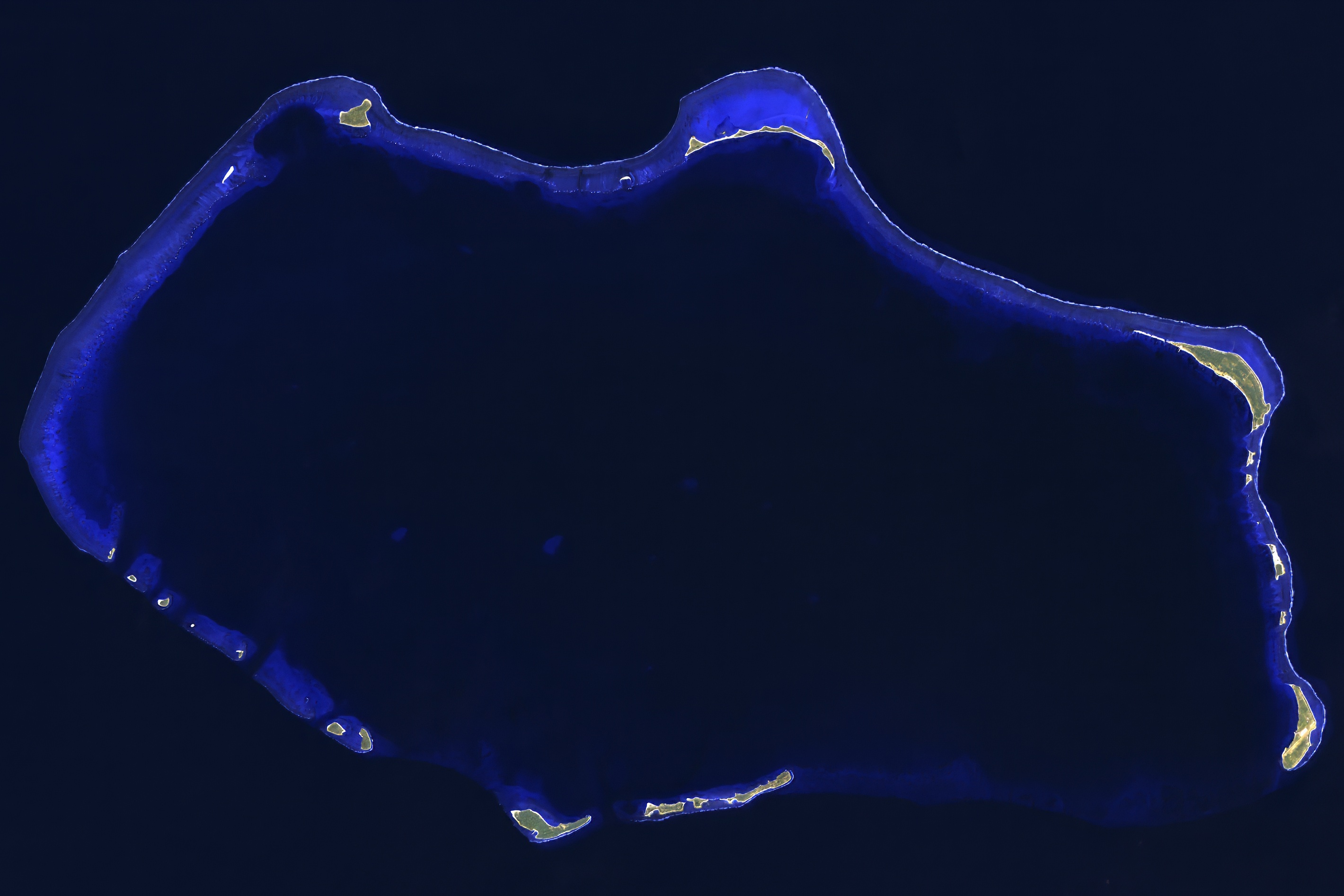
Bikini Atoll
At dawn, Bikini Atoll emerges from the heart of the Pacific Ocean like a specter of history, its crescent of coral islands ringed by azure waters that shimmer in the early light. The air is heavy with salt, mingling with the faint, sweet scent of coconut palms that line the narrow shores. Here, on this uninhabited atoll within the Marshall Islands, the land whispers tales of a world both lost and preserved. Under the watchful gaze of a rising sun, the lagoon's surface glistens, an expansive mirror reflecting the sky's transformation from inky black to the soft hues of morning. Seabirds circle lazily overhead, their cries punctuating the silence, as if calling out to the spirits of those who once called these shores home.
Journey across the atoll, and the landscape unfolds in paradoxical beauty. The coral sands, bleached white by relentless sun, crunch underfoot, a tactile reminder of the atoll's fragility. In the distance, towering breadfruit trees sway gently in the breeze, their leaves rustling with secrets from a time when the island thrived with life. Yet, beneath this tranquil veneer lies a complex history of displacement and resilience, where the legacy of past events lingers like a shadow, shaping the very essence of Bikini Atoll.
Once a vibrant community, Bikini Atoll was home to the Bikinians, a Polynesian people whose lives were intricately woven into the fabric of the island's ecosystem. For centuries, they lived in harmony with the land, their customs and traditions rooted in a deep respect for nature. Coconut groves provided sustenance, while the lagoon's rich waters teemed with marine life, a bountiful pantry for fishermen skilled in the art of outrigger canoeing. Here, the Bikinians practiced a life of balance and simplicity, their chants and stories echoing across the waves, preserving their heritage through oral tradition.
This serenity was shattered in 1946, when the islanders were asked to temporarily relocate to allow the United States to conduct nuclear tests. The promise of return was a bitter irony, as the atoll became the stage for Operation Crossroads—a series of tests that left a landscape forever altered. The first test, named "Able," loomed like a man-made sun on the horizon, a cacophony of explosive force that twisted the skies and scorched the earth. Mushroom clouds rose defiantly, casting an ominous pall over the Pacific, their radioactive fallout embedding into the very coral that formed the island’s bones.
The aftermath left an indelible mark on the Bikinians and their homeland. For decades, they lived in exile, their dreams of returning home intertwined with the haunting memories of what had been lost. Today, remnants of the tests remain: rusting tanks resting on the ocean floor, silent sentinels to a bygone era, and ghostly ships like the USS Saratoga, lying dormant in the lagoon’s depths, a diver’s paradise and a historian’s somber muse.
Yet, amid this narrative of destruction, Bikini Atoll has become a testament to nature's resilience and rebirth. Over time, the island's ecosystem has shown remarkable recovery, with vibrant coral gardens flourishing beneath the waves, their tendrils reaching out to the sunlit surface. Marine life thrives once again, with schools of parrotfish and graceful manta rays weaving through the coral labyrinths. It is a living paradox—a contaminated Eden where life finds a way to persevere against the odds, defying the legacy of human folly.
In recent years, scientific interest has sparked renewed examination of Bikini Atoll’s unique environment. Researchers are drawn to the atoll’s unexpected role as a natural laboratory, offering insights into nuclear impact and ecosystem resilience. The stark contrast between destruction and regeneration provides invaluable lessons, urging humanity to reflect on its stewardship of the planet and the delicate balance of life.
As one strolls along the quiet shores, the tactile sensation of warm sand beneath bare feet is accompanied by an ever-present sense of awe and solemnity. The wind carries whispers of the past, tales etched into the landscape by time and tides. The bittersweet symphony of the atoll plays on—a reminder of human ambition, tragedy, and hope interwoven within the tapestry of this isolated paradise.
Today, Bikini Atoll remains uninhabited, a silent witness to its own history. The Bikinians' dream of return is still a distant hope, held by the promise of ongoing efforts to restore the island to a safe haven for future generations. The atoll's story is one of endurance, a narrative that weaves together the threads of human experience and natural wonder, leaving an indelible impression on all who encounter its haunting beauty.
As the sun sinks below the horizon, painting the sky in shades of amber and rose, Bikini Atoll becomes a place of reflection—a canvas where the past and present converge, inviting contemplation of humanity's choices and the enduring spirit of nature. Here, in the vast expanse of the Pacific, the atoll stands as a beacon of both caution and resilience, challenging us to remember and learn from the echoes of its history—a place where the future remains unwritten, waiting to be shaped by those who hold its story dear.
Between 1946 and 1958, Bikini Atoll was the site of 23 nuclear tests conducted by the United States, including the 'Castle Bravo' test, which was over 1,000 times more powerful than the bomb dropped on Hiroshima.
Despite its stunning beaches and crystal-clear waters, Bikini Atoll remains largely uninhabitable due to lingering radiation, with only a small number of caretakers visiting to maintain facilities.
In 2010, Bikini Atoll was designated a UNESCO World Heritage Site for its cultural and historical significance, marking it as a stark reminder of the nuclear era.
Bikini Atoll is a top destination for wreck divers, offering the unique opportunity to explore sunken naval vessels like the USS Saratoga, which was deliberately sunk during nuclear testing.
The native Bikini Islanders were relocated in 1946 to allow for nuclear testing and have since struggled with displacement, despite efforts to resettle them on safe nearby islands.