Rare Parakeet Paradise
The Antipodes Islands are home to the Antipodes parakeet, a unique species of parrot found nowhere else on Earth, known for its vivid green plumage and curious behavior.
New Zealand
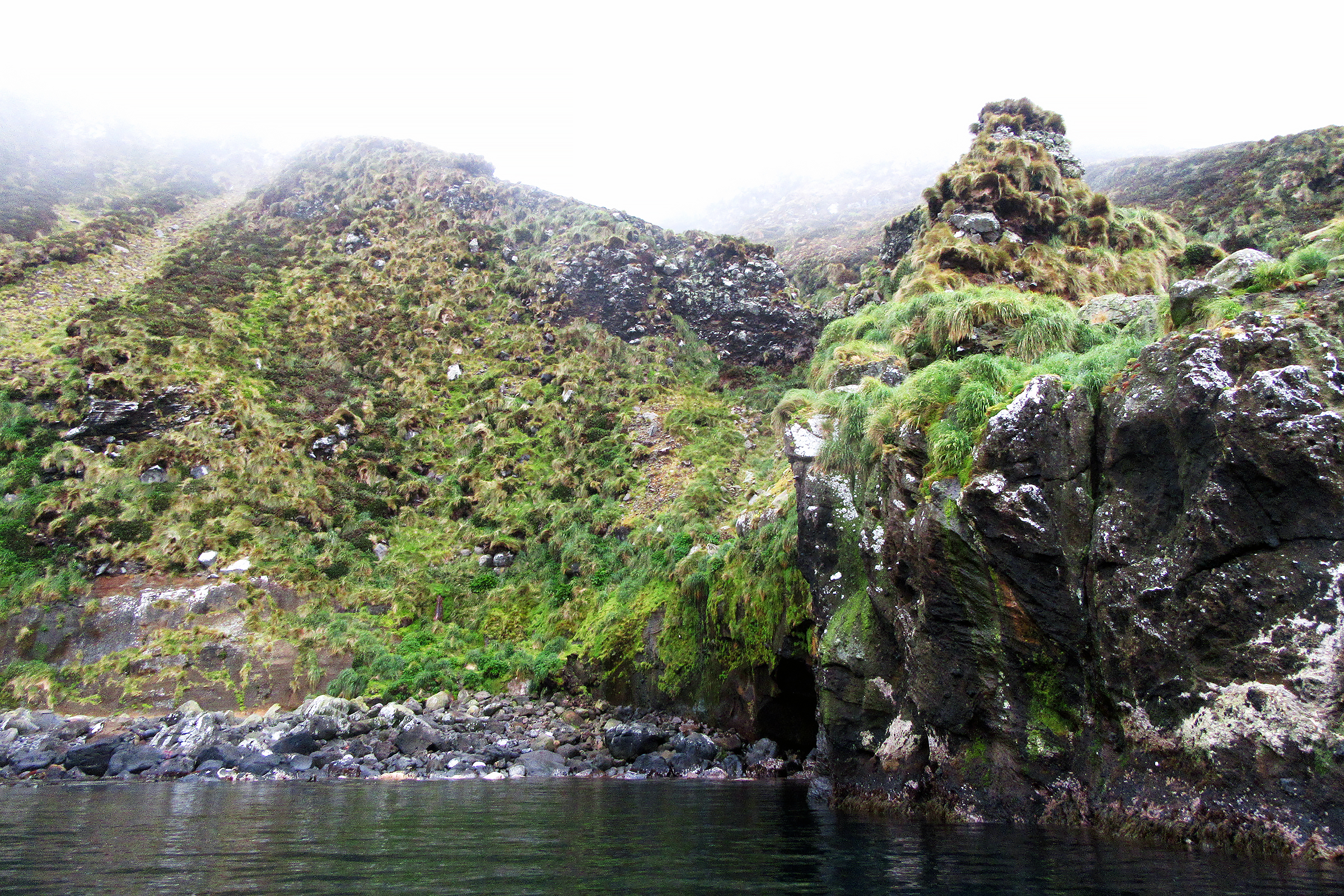
Antipodes Islands
At the edge of the world, where the Pacific Ocean's tumultuous embrace meets the southern sky, lie the Antipodes Islands—a jagged necklace of ancient volcanic rock cast adrift by time. The islands rise abruptly from the sea, their basalt cliffs standing stark and resolute against the relentless gale. Mist, like a shroud woven from the dreams of mariners long lost at sea, clings to their craggy surfaces as tendrils of fog snake inland, engulfing everything in a soft, ethereal embrace. Here, 860 kilometers southeast of New Zealand, the air is thick with mystery and the sharp tang of salt, as seabirds wheel in a cacophony of cries that whip through the icy wind, their wings tracing arcs against the steel-gray sky.
Feel the raw energy of this place as you set foot on its rocky shores. The land is alive with secrets whispered by the wind, a desolate harmony of muted greens and grays where tussocks of hardy grass cling tenaciously to the earth, defying the ceaseless roar of the ocean. The volcanic soil, dark and fertile, supports a unique ecosystem, where the Antipodes parakeet—the only flightless parakeet in the world—scuttles across the ground, its feathers a vivid splash of green against the somber landscape. This isolated corner of the planet is a sanctuary for the unusual and the rare, a living museum of evolution's curious experiments.
For centuries, these islands have stood untouched by human habitation, a fact that lends them an air of untouched wildness. But traces of transient human presence linger—most poignantly in tales of shipwrecks and survival. In 1893, the Spirit of the Dawn met its demise on these unforgiving rocks. Castaways from her wreck clung to life, eking out an existence on meager provisions until rescue arrived. Their story, etched into the annals of maritime history, is a testament to human resilience in the face of nature's indifference.
The Antipodes Islands are a testament to nature's artistry, sculpted by the elements over millennia. The terrain is dominated by towering peaks and deep ravines, carved by ancient lava flows that solidified into fantastical shapes. The highest point, Mount Galloway, rises to 402 meters, its summit often cloaked in a veil of cloud. These rugged landscapes are punctuated by sparkling freshwater streams that cascade down steep slopes, nourishing the island's unique flora and offering life to the creatures that call this place home.
Cultural echoes resonate in the names of these islands, a nod to their geographical antipodal position to Greenwich, England. But beyond the cartographic curiosity, they hold a deeper significance for conservationists and scientists. This uninhabited archipelago is a critical breeding ground for seabirds, hosting significant populations of albatrosses and petrels. These avian mariners, with wingspans that defy imagination, circle the globe, returning here to nest on these remote cliffs—a cycle as ancient as the seas themselves. The haunting calls of the Antipodean albatross, with its piercing, mournful cries, fill the air—a reminder of the delicate balance of life on these isolated isles.
In the midst of this stark beauty, life finds a way to flourish. The island's flora, though sparse, is remarkable for its resilience. Large-leaved megaherbs, such as the Antipodean megaherb, stand resilient amidst the exposure, their lush foliage a stark contrast to the rugged terrain. These plants, evolving in isolation, are a botanical wonder, their bright blooms offering brief explosions of color that punctuate the island's muted palette.
Yet, the Antipodes Islands remain shrouded in enigma. The presence of the enigmatic parakeet and the flightless rails, both endemic to this solitary refuge, raise questions about the islands' evolutionary pathways. The harsh weather patterns, with winds that howl at over 60 knots, sculpt the landscape anew with each passing storm. Here, seasons are marked not by the turning of leaves but by the rhythms of life and death among the island's inhabitants, a perpetual dance choreographed by the elements.
As you stand amidst the swirling mists and the ceaseless cries of seabirds, a profound sense of solitude envelops you. The islands, with their rugged beauty and unyielding spirit, invite contemplation of humanity's place in the natural world. Here, where land meets sky and sea, the past and future intertwine, each gale carrying echoes of history that ripple through time.
The Antipodes Islands are more than a geographic marvel; they are a poignant reminder of the world's untamed corners and the stories etched into their landscapes. They whisper of resilience, of life carved from stone and wind, and of the eternal dance between land and sea. As we ponder their fate amidst a changing climate and the encroachment of human activity, we are left with an open question: How will these isolated sentinels endure, and what role will we play in their story's unfolding chapters?
In the heart of this isolation, we find a reflection of our own journey—a journey marked by survival, adaptation, and the enduring quest to understand the world and our connection to it. The Antipodes Islands, with their wild beauty and silent strength, leave us with a sense of wonderment, urging us to cherish and protect these rare glimpses into nature's unbridled creativity.
The Antipodes Islands are home to the Antipodes parakeet, a unique species of parrot found nowhere else on Earth, known for its vivid green plumage and curious behavior.
In the 19th century, mice inadvertently introduced by sealers thrived on the Antipodes Islands, leading to a massive ecological impact, until an eradication project in 2016 aimed to restore the island's native ecosystem.
Despite being located in the subantarctic region, the Antipodes Islands experience relatively mild temperatures year-round due to the warm ocean currents, resulting in a unique mix of flora and fauna.
The Antipodes Islands, part of New Zealand's subantarctic territory, have no permanent human population and are only visited by researchers and conservationists, making it one of the most isolated places on the planet.
Several shipwrecks have occurred around the Antipodes Islands, including the ill-fated Spirit of the Dawn in 1893, which led to a dramatic rescue after the vessel struck rocks in foggy conditions.